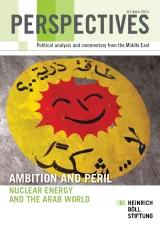
Perspectives Middle East No.1: Nuclear Energy and the Arab World

April 5, 2011

Editorial - Nuclear Energy and the Arab Spring

After decades of relative quiet, popular discontent erupted massively in Arab streets.Starting with the protests in Tunisia, and across social, political and demographic boundaries, Arab populations are openly challenging those tenets of power that oppressed them for decades. Aged dictators are forced into exile. In some countries, authoritarian rule, hereditary presidencies and exclusive decisionmaking by isolated elites seem patterns of the past. Dignity is the word of the day. Arab societies long portrayed as conglomerates of tribal confederations and clan-based clienteles rediscover in their revolts collective responsibility and sense of belonging.

Identical slogans and political demands are reverberating in the main squares of Tunis, Cairo, Sanaa and many other cities. The collective movements that proved so powerful, mature and disciplined in overthrowing the top brass of oppressive structures in Tunisia und Egypt are now facing the massive task to transform ailing political institutions, to reform security apparatuses, to combat corrupt structures, and to increase opportunities for social, economic and political participation. In Libya, the country’s leadership is waging outright war against the uprising of its people. And in again other countries, such as Algeria, Bahrain, Syria, Saudi-Arabia and the Gulf in general, authoritarian rule seems deeply entrenched and quite resilient.

Despite all uncertainties, one factor is clear: there is an element of irreversible change and open debate in the Arab World, and a sense that democratic participation is not limited to forming political parties and competing in elections. Today, Arab citizens claim their right to be informed and to have a word when
decisions are being taken by governments that may affect the very future of their societies.

The transfer and use of modern technologies requires such decisions. Among the most controversial of all, the civilian use of nuclear energy ranks high on the list. The nuclear disaster in the Japanese city of Fukushima on 11 March 2011 has brought the destructive potential of this technology to the forefront again. A leading industrial nation, Japan was not able to prevent the exposure of its citizens to massive hazards and risks as a result of the nuclear meltdown.

Should Arab countries with less advanced technological capacities invest in nuclear energy production that proved uncontrollable in Japan? Why do Arab decisionmakers perceive nuclear energy as bridge to the solar age and potential to decrease the dependency of external resources? Why is nuclear power so popular, despite its negative reputation in reliability, security and sustainability? What are the viewpoints of civil society?

These and other questions will be discussed in the first edition of Perspectives Middle East - Political Analysis and Commentary, of the Heinrich Böll Stiftung. Analysts, activists and decision-makers in the region and Europe take a critical look at the emergence of nuclear energy programs in the Arab world. The eight articles and interviews of this e-publication will be followed by a special issue of Perspectives Middle East in April 2011, with an in-depth focus on the extraordinary developments of the Arab revolutions.

Perspectives Middle East is a publication series of the Heinrich Böll Stiftung’s offices in Beirut and Ramallah that seeks to provide a platform for presenting analysis and viewpoints primarily of experts from the region.

Layla Al-Zubaidi, Director, Heinrich Böll Stiftung, Middle East Office Beirut
Joachim Paul, Director, Heinrich Böll Stiftung, Middle East Office Ramallah


CONTENTS:
  • Editorial - Nuclear Energy and the Arab Spring
  • The Arab Region as Part of a Nuclear Renaissance: Outlooks and Alternatives
    Dennis Kumetat and Nikolaus Supersberger
  • Nuclear Reactors or Hernia Surgery?
    Najib Saab
  • Going Nuclear: An Arab Oppenheimer? An Arab Response to Iranian Nuclear Energy Ambitions Should be Dictated by Wisdom and Not by Emotion
    Larbi Sadiki
  • Women and Nuclear Energy
    Leila Ghanem
  • United Arab Emirates (UAE): The Nuclear Program and Renewable Energy Alternatives
    Mohamed Abdel Raouf
  • Energy of the Future Instead of Technology From the Past
    Jürgen Trittin
  • We Need a Long Term Advocacy Strategy Towards a Nuclear Free Region
    Interview with Ali Darwish
  • Nuclear vs. Renewables? Energy Options for Iran
    Hamed Beheshti 

Political analysis and commentary from the Middle East -
Perspectives Middle East No.1: Nuclear Energy and the Arab World
   
Editor Heinrich-Böll-Stiftung
Place of publication Beirut / Ramallah
Date of publication April 2011
Pages 36
ISBN --
Service charge Free of charge


Creative Commons License This text is licenced under a Creative Commons Licence.
Your basket


Terms of delivery
General Terms and Conditions, Heinrich Böll Foundation (hbf)

Following is information concerning your orders: postage and cost, data security policy, exemption clauses, and where to call for further information. more»
Help
A Step-by-step Guide on How to Place an Order on boell.de
A step-by-step guide, explaining in detail how to order publications on boell.de. more»
Panel: Multicultural Politics
Energytransition.de DOHA Banner eng Banner Focus on Hungary Discover the Böll Stiftung
Blogs
loader
The Foundation in Social Networks
Icon Facebook, CC-BY-SA jwloh01 at gmail dot com Facebook Icon Twitter, CC-BY-SA jwloh01 at gmail dot com Twitter
Icon YouTube, CC-BY-SA jwloh01 at gmail dot com YouTube Icon Flickr, CC-BY-SA jwloh01 at gmail dot com Flickr
Icon SoundCloud SoundCloud Icon RSS-Feed Feeds
Blog Euro Crisis Banner: Triple Crisis Blog Women's Voices, Women's Choices - 100 years of international Women’s Day The Climate Network-Transatlantic Solutions for a Low Carbon Economy