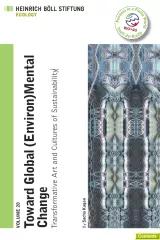
Publication Series Ecology, Volume 20
Toward Global (Environ)Mental Change
Introduction
The global crisis of unsustainability is not only a crisis of the hardware of civilization, it is also a crisis of the software of minds. The search for a more sustainable development in the ‘developed’ world has, so far, been focusing too much on hardware updates, such as new technologies, economic incentives, policies and regulations, and too little on software revisions, that is cultural transformations affecting our ways of knowing, learning, valuing and acting together. The cultural software is, nevertheless, at least as much part of the fundamental infrastructure of a society as its material hardware.We need a global (environ)mental change, that is a transformation process to affect the many relationships between our minds and their environments. There are several environments to the conscious mind, such as the subconscious, the shared culture(s) and the natural environment. They are not all just environments, but also part of our minds. This is a bit like a hologram: Each part of the hologram contains some information about the whole. Each human mind echoes elements from its environments, and is connected to them in many ways. Global (environ)mental change will highlight complex interdependences and will teach us, not to be afraid of these complexities. This requires a movement away from our culture of unsustainability which is hindering our grasp of these interdependences (part 1).
Some changes are already underway, affecting lifestyles in daily practices, as several social-cultural movements across the world are illustrating. The spread of the commons, transition towns, permaculture and right to the city movements bear some promises for a cultural transition (part 2). Certain types of artistic practices and experiences of art also bear great potentials to reconstruct the software of our minds (parts 3 and 6).
Among the cultural categories that need revision, is our modern, Western understanding of “nature”. Instead of a nature/culture dichotomy, global (environ)mental change induces us to think in terms of a dynamic NatureCulture complex (part 4). Some other dichotomies also need revision, such as markets/ State and mind/body (part 2).
To help us face complex interdependences, I am suggesting that we foster our aesthetic sensibility to complexity (part 5). And to help us learn and experiment sensible ways out of our unsustainable lifestyles, I am suggesting that we foster serendipity and learn to induce profound changes in society not with spectacular actions but with subtle maturation (part 7).
| Transformative Art and Cultures of Sustainability - Toward Global (Environ)Mental Change |
|
| Editor | Heinrich Böll Foundation |
| Place of publication | Berlin |
| Date of publication | February 2012 |
| Pages | 44 |
| ISBN | 978-3-86928-076-9 |
| Service charge | Free of charge |
(3) comments
1_ Cristina Nunez5. April 2012, 13:08 h
2_ charlotte bagger brandt
11. June 2012, 11:02 h
3_ Boell.de Editor
11. June 2012, 11:58 h


