
Analysis
What was agreed at COP17 in Yerevan, what was watered down and what remains unresolved? This analysis examines what the decisions mean for the future of global biodiversity protection.

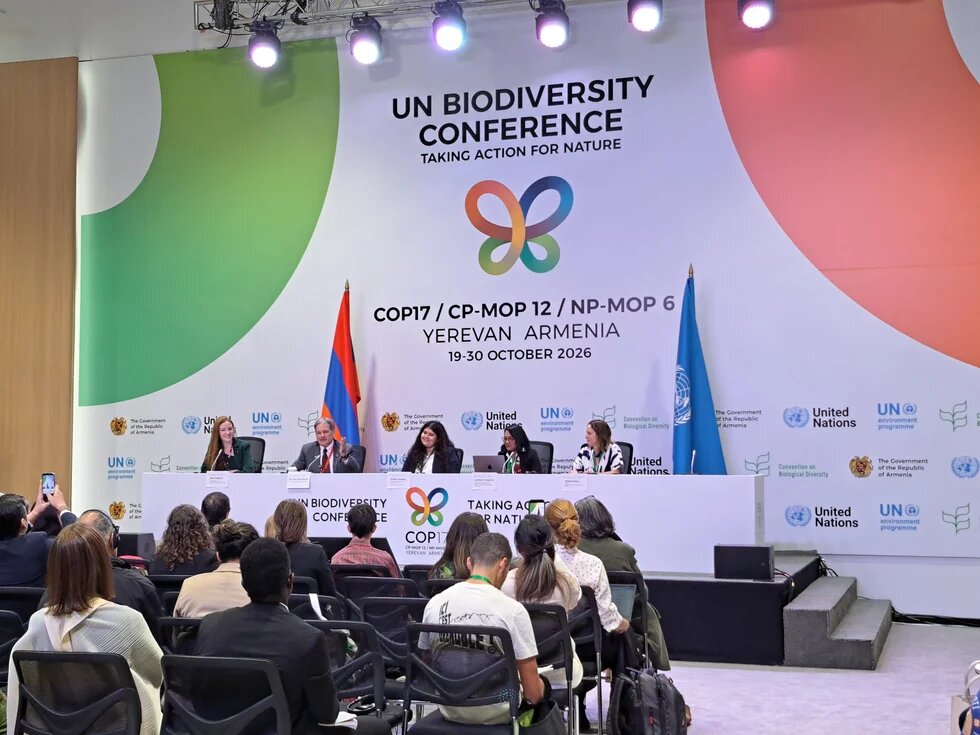
Unspectacular progress characterized much of COP17, which closed at 10:30 am on 31 October, one day later than scheduled. After working through the night, the steady hand of the Armenian Presidency shepherded through some difficult decisions.
Clearly having learned from the abrupt suspension of COP16 in Colombia, where major decisions were not adopted due to the meeting’s overrun and consequent lack of quorum, the COP17 President proposed that the two most anticipated decisions – on the global review of collective progress in the implementation of the KMGBF and on resource mobilization – be adopted together early on.
Proposals by the Armenian Presidency based on closed-door ministerial consultations aimed at tackling political deadlock, and subsequent informal bilateral meetings, were presented as options in the final documents. After the last few remaining issues were resolved, and with no objections, the COP17 President adopted them together to applause.
Global review and Yerevan pathway settle on compromises
The first global review, held four years after the KMGBF was adopted, was based largely on the global report, State of Biodiversity Action. Its findings are dire for biodiversity, despite the report’s methodological and data limitations, and despite the positive spin put on it.
Importantly, the global review does not address the root and structural causes of biodiversity destruction, which include the rules of the economic and financial system that drive extractivism at the expense of social and environmental well-being, financial flows that fund sectors driving biodiversity loss, regulatory capture by corporations that results in lower standards of biodiversity protection, and the flaws of market logic applied to biodiversity, which cause harm to nature and peoples. These issues were highlighted in a civil society report, We Need To Talk About The Elephants In The Room (And Why Ignoring Them Perpetuates Biodiversity Destruction), that was released at COP17.
The global review’s “Yerevan pathway for accelerating the implementation of the Kunming-Montreal Global Biodiversity Framework” highlights certain actions to accelerate, enhance and strengthen under the six areas identified in the global report – action and implementation, scope and coverage, means of implementation, whole of government, whole of society, and monitoring and knowledge.
The Armenian Presidency had proposed final compromises on a few outstanding issues, including:
(i) In the section on accelerating action and implementation, “Emphasizes that accelerating implementation would need to be supported through increased action to address the underlying drivers of biodiversity loss.” Proposed text relating to the global transformation of economic and financial systems, addressing economic sectors that impact nature, addressing barriers and dis-enablers to implementation, and aligning activities and financial flows with the KMGBF, was dropped.
(ii) In the section on strengthening means of implementation, “Also encourages Parties, in accordance with national circumstances, priorities and capabilities, to accelerate the implementation of Target 18 of the Framework.” Language on harmful incentives, including subsidies, was deleted.
(In the decision on mainstreaming biodiversity within and across sectors, a paragraph with similar language on harmful incentives was also eventually deleted, and the final compromise was to include reference to both Targets 18 and 19 in another paragraph. Target 19 is the target on financial resources, and its inclusion alongside Target 18 on harmful incentives satisfied the balance in focus that a number of developing countries sought.)
A constant tussle in the negotiations of the global review was between developed countries pushing for language on accelerated implementation, increased ambition, and improved actions and efforts, while developing countries continued to qualify their action as being “in accordance with national circumstances, priorities and capabilities,” and to insist that developed countries meet their financial obligations under the Convention and provide the means of implementation – the necessary finance, technology transfer, technical and scientific resources, and capacity building – so that developing countries could take more action to protect biodiversity, most of which lies in their territories. Developed countries have also historically overconsumed, driving biodiversity destruction, and have continued to do so since the colonial era, when resources were extracted from the global South to the North, paving the way for structural inequities that persist to this day.
Financial mechanism criteria adopted, contributor base impasse resolved
Following difficult negotiations on resource mobilization regarding the criteria for the institutional structure to operate the financial mechanism, the resulting decision puts the COP16 road map back on track by adopting the criteria, comprising four already-agreed criteria and seven criteria further developed at COP17. The criteria are key for COP18, where the road map envisages a decision on whether to establish a new entity to operate the financial mechanism, which has long been a demand of developing countries. If such a decision is made, the terms of reference and modalities of a new entity need to be developed on the basis of the criteria. This will be pivotal in determining whether the CBD will have a permanent financial mechanism that is fit for purpose and addresses existing grievances and inequities associated with the GEF.
On the options for “broadening the contributor base,” in particular sovereign contributors, there was much discontent among developing countries, as the COP16 decision did not mandate amending the list of developed-country Parties and other Parties that may voluntarily assume the obligations of the developed-country Parties. The proposal from the developed countries to use the World Bank high-income threshold for this purpose had already been rejected by 83 developing countries at SBI7, as it could undermine the voluntary nature of the process and the obligation for developed countries to provide finance to developing countries.
Despite the politically sensitive nature of these discussions and the large divergences, the ministerial consultations eventually yielded a compromise – preserving the voluntary nature of the process, and broadening the issue beyond sovereign contributions to include mobilizing resources from private and other sources. This delicate balance was then agreed to.
Article 8(j) holds up plenary, interim solutions adopted
The issue of the modus operandi of the Subsidiary Body on Article 8(j) and Other Provisions of the Convention related to Indigenous Peoples and Local Communities (SB8j), established at COP16, held up the plenary for several hours, due to disagreements, including over the representation of Indigenous Peoples and local communities, the composition of its Bureau and the nomination of its Co-Chairs.
Following intensive negotiations, the final compromise established a group of Friends of the Bureau, comprising representatives of Indigenous Peoples and local communities, while postponing decisions on its composition, selection procedures, and working modalities until COP18. There will also be two Co-Chairs serving on a rotating basis, one nominated by the Parties and the other nominated by, and representing, Indigenous Peoples and local communities. The latter will be nominated according to their own procedures, safeguarding their autonomy and representative governance systems.
Other important decisions were the adoption of the “Sevan Guidelines” – voluntary guidelines recognizing the role of Indigenous Peoples and local communities in the implementation of Targets 2 (on ecosystem restoration) and 3 (on protected areas and other effective area-based conservation measures) of the KMGBF – and a decision that called for adequate financial resources and simplified funding mechanisms to support Indigenous Peoples and local communities’ self-determined priorities, although the final text did not retain the stronger language sought on direct financing.
Kicking the can down the road on DSI
COP17 did not reach agreement on most of the substantive issues on DSI. With intersessional preparations insufficient to enable informed decisions on several outstanding implementation questions and future modalities, the Parties settled on a largely procedural outcome, deferring further work to COP18. Discussions on substantive issues were particularly contentious, given the context of mistrust caused by a disproportionate focus on the interests of business and other DSI users. Consensus was ultimately reached through a President’s text.
Some elements were agreed to on an interim basis, for instance, an allocation methodology for distributing Cali Fund resources to Parties. However, important questions remain unresolved, and an Ad Hoc Open-Ended Working Group has been established to address them. These issues include additional modalities on pathways for monetary contributions to the Cali Fund, non-monetary benefit-sharing, and the accountability and transparency of databases.
The proposal that Parties should recognize Cali Fund certificates as an incentive for users was contentious. Several Parties feared that such recognition could disproportionately burden provider Parties with national ABS laws, whereas the decision from COP16 primarily calls on user countries to incentivize DSI users. There will be further work on the elements and process of issuing the certificates.
Undermining precaution on synthetic biology
The decision on synthetic biology significantly weakens the CBD process in the short term, undermining progress in establishing precautionary oversight of the latest developments in the field. There was little support for the establishment of a new Ad Hoc Technical Expert Group (AHTEG) to develop a robust methodology for assessing potential impacts of synthetic biology developments.
Instead, there is a process for submission of views, and an online forum to gather information on new developments, including their potential positive and negative impacts, and on existing methodologies for assessing such impacts. There will also be a stocktaking exercise, which will inform future work. Identifying gaps, overlaps, duplication, and complementarities with existing processes will be important.
The Parties also adopted a voluntary thematic action plan to support capacity-building and development, access to and transfer of technology, and knowledge-sharing in the context of synthetic biology. The initial push to lay the groundwork for enabling or promoting commercialization pathways was partially thwarted, with a rebalancing toward increasing biosafety, assessment, and monitoring capacities.
Weakened biodiversity and climate links, cooperation deferred
The outcome of the biodiversity and climate discussions considerably weakened references to the interdependence of the biodiversity and climate crises. The final decision welcomed only the summary for policymakers of the IPBES nexus assessment, removing references to the IPBES transformative change assessment and the advisory opinions of the International Court of Justice and the International Tribunal for the Law of the Sea.
The supplement to the voluntary guidelines for ecosystem-based approaches to climate change adaptation and disaster risk reduction, including a primer for policymakers, had undergone a first peer review. However, COP17 did not adopt it but instead requested further views from Parties and stakeholders, and for a revised primer to be considered at SBSTTA29 and COP18.
The multilevel road map for enhancing cooperation, policy coherence and synergies across the Rio conventions will be peer-reviewed by Parties and stakeholders and further considered at SBSTTA29. These discussions were closely linked to the agenda item on cooperation with other conventions and international organizations.
In those discussions, Parties also failed to agree on many issues, including the multilevel road map, the role of the different convention secretariats, proposals for joint programming and complementary or synergistic financing to address biodiversity loss, climate change, land degradation, and pollution, and cooperation with the new BBNJ Agreement, the Human Rights Council, and SB8j.
The final document on cooperation was ultimately not adopted because the meeting overran so far. Another six decisions of the COP and the Nagoya Protocol COP-MOP were also not adopted. This means that there will be nothing new to implement on those issues until they are adopted at COP18 in 2028.
COP17 may well be remembered more for its missed opportunities. Extremely divergent views made bridging differences a delicate balancing act. Many references important for rights holders and civil society were lost or diluted, while urgent action was postponed. National implementation efforts to address the ongoing biodiversity crisis are more important than ever before.
*With inputs from colleagues at the Third World Network


