
Dossier
Berlin Forum on Global Cooperation
How are Germany and Europe shaping their relationship with the increasingly important part of the world known as the "Global South"?
The annual Berlin Forum on Global Cooperation brings together politicians, academics, administrators, business leaders, civil society representatives, media professionals, international organizations, and the next generation of experts to discuss the key challenges of global cooperation. We deliberately seek to intertwine different dimensions, such as trade and economics, energy, climate, biodiversity, raw materials, migration, geopolitics, humanitarian aid, and democracy. Overarching issues of decolonization, changing power relations, and gender relations are also reflected upon.
Each year, a current focus topic is set and explored in depth in intensive deep dives, moderated by young professionals who actively shape the discussion.
Review
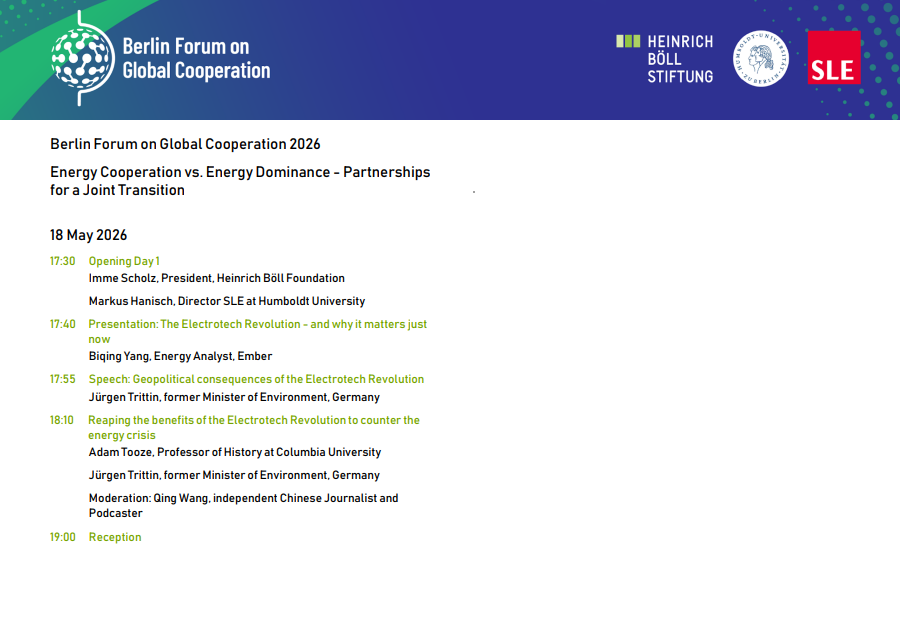
Berlin Forum on Global Cooperation 2026
Energy Cooperation vs. Energy Dominance – Partnerships for a Joint Transition
Recordings
Opening Event: The Electrotech Revolution and its Geopolitics
- Biqing Yang, Energy Analyst, Ember
- Jürgen Trittin, former Minister of Environment, Germany
- Adam Tooze, Professor of History at Columbia University
Berlin Forum on Global Cooperation 2026 - Keynote Gabriel Boric - Heinrich-Böll-Stiftung
 Watch on YouTube
New Energy Cooperation Must Be Different in Structure
- Gabriel Boric, former President of Chile
Berlin Forum on Global Cooperation 2026 - Jennifer Morgen: Energy Cooperation vs. Energy Dominance - Heinrich-Böll-Stiftung
 Watch on YouTube
The Future of Global Energy Cooperation: Sustainable Energy Partnerships
- Jennifer Morgan, former State Secretary and Climate Envoy, Germany
Berlin Forum on Global Cooperation 2026 - Germany’s Energy Cooperation with the Global South - Heinrich-Böll-Stiftung
 Watch on YouTube
Germany’s energy cooperation with the Global South: Countering fossil dominance?
- Adriana Abdenur, Co-President Global Fund for a New Economy, Former Special Advisor, Presidency of Brazil - International Affairs
- Ina von Frantzius, Head of Unit, Agriculture and Rural Development, Federal Ministry for Economic Cooperation and Development Germany
- Olumide Abimbola, Executive Director Africa Policy Research Institute (APRI)
- Sven Giegold, Deputy Federal Chair of the Alliance 90/The Greens
Berlin Forum on Global Cooperation 2026 - Deep Dive: Europe and China in the Global South - Heinrich-Böll-Stiftung
 Watch on YouTube
Deep Dive: Europe and China in the Global South
- Martin Voss (Germanwatch)
- Jennifer Morgan (CIERP/Hertie School)
- Olumide Abimbola (Africa Policy Research Institute, APRI)
- Xing Fu-Bertaux (European Climate Foundation).
Berlin Forum on Global Cooperation 2026 - Closing Panel: Where do we go from here - Heinrich-Böll-Stiftung
 Watch on YouTube
Closing Panel: Where do we go from here
- Adriana Abdenur, Co-President Global Fund for a New Economy, Former Special Advisor, Presidency of Brazil - International Affairs
- Jennifer Morgan, former State Secretary and Climate Envoy, Germany
Graphic Recordings
The four Deep Dives of the Berlin Forum 2026 were accompanied live by a graphic artist. The result is visual snapshots that summarize the central discussions, ideas and controversies of the sessions at a glance.
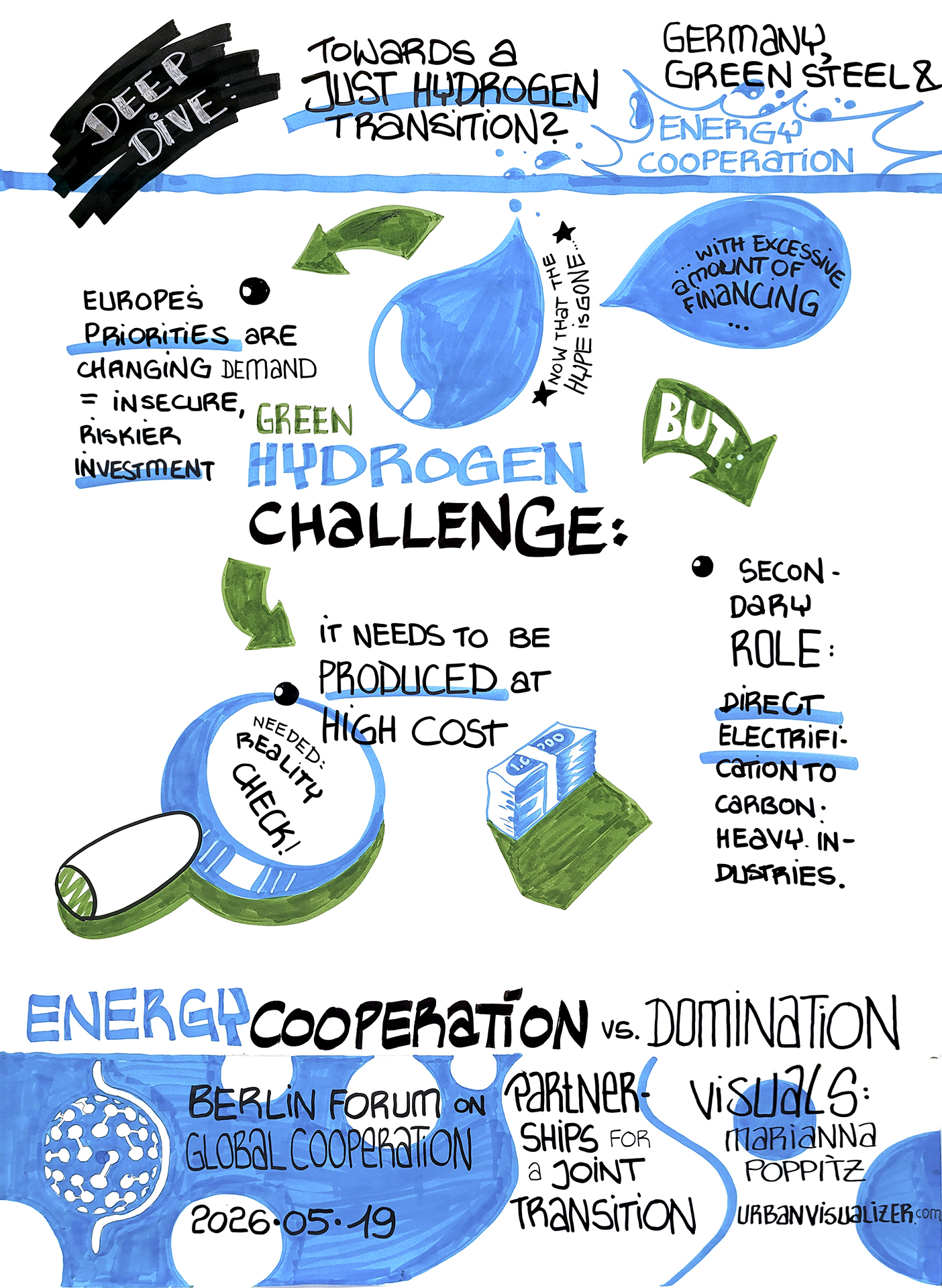
Towards a Just Hydrogen Transition?
What are the opportunities and limitations of green hydrogen, and why is international cooperation crucial for a just energy transition?
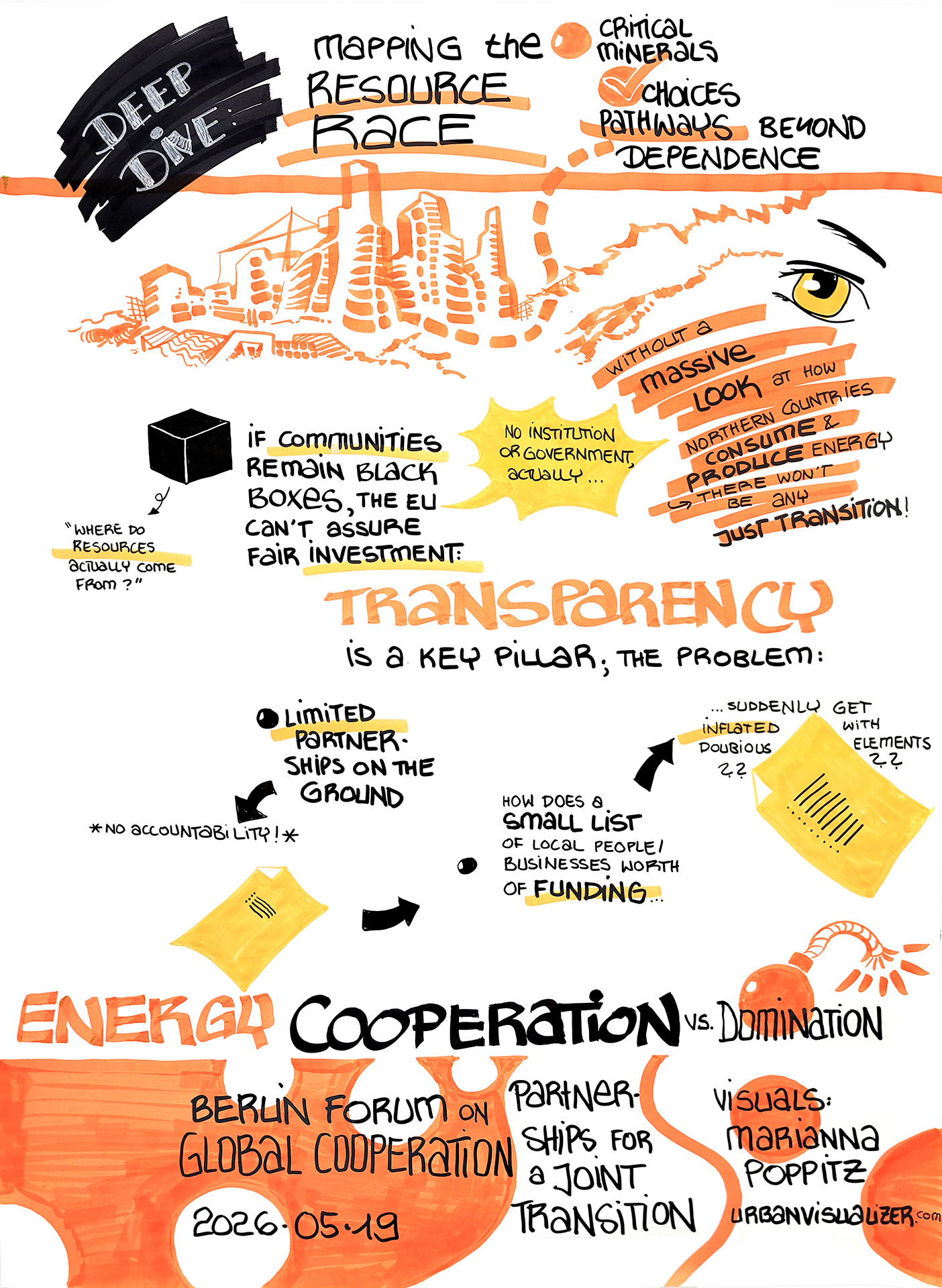
Mapping the Resource Race
How important are transparency and fair partnerships in the management of critical raw materials for the energy transition?
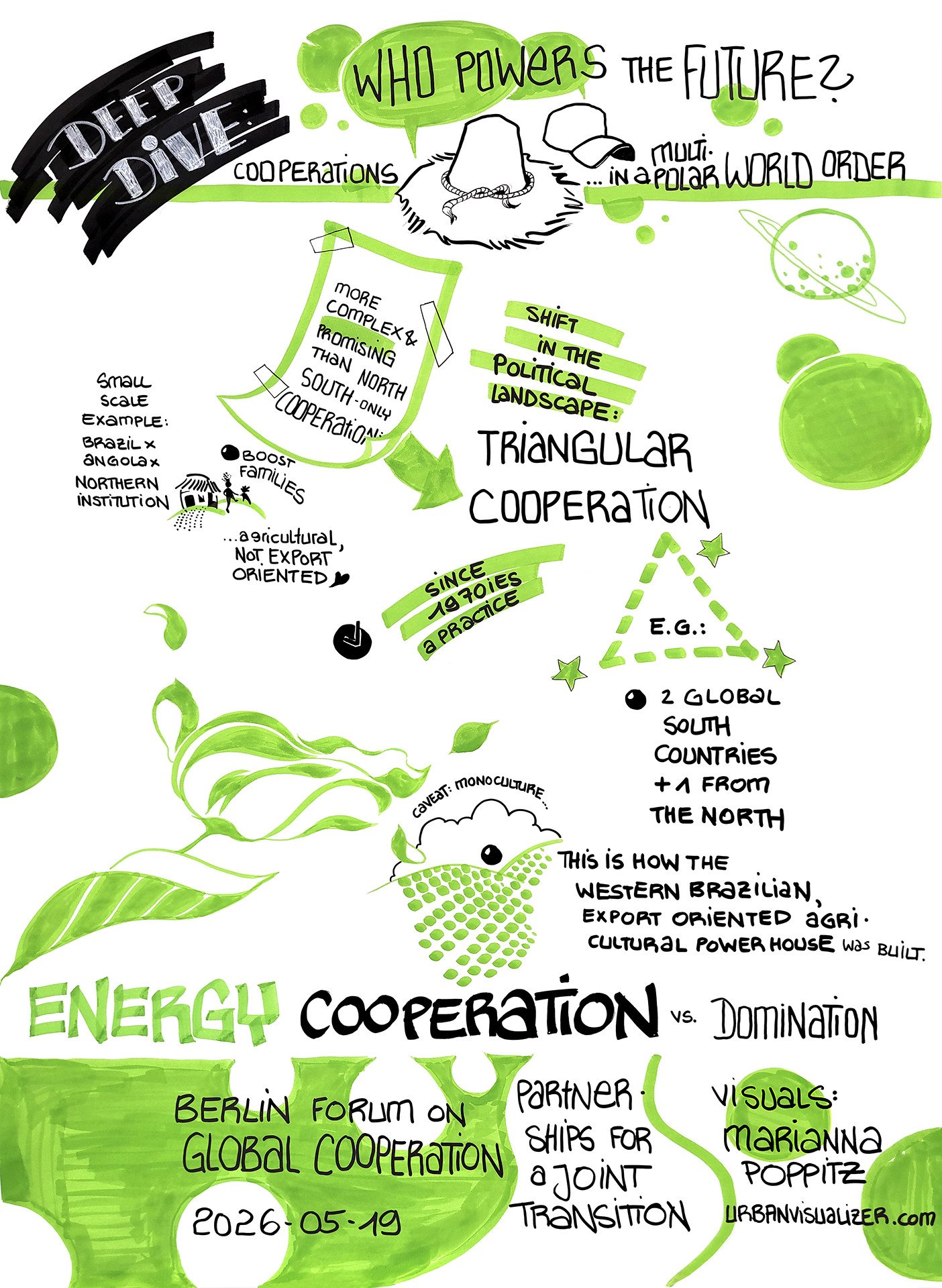
Who Powers the Future?
New models of cooperation between countries in the Global South and North can contribute to a more just global transformation.
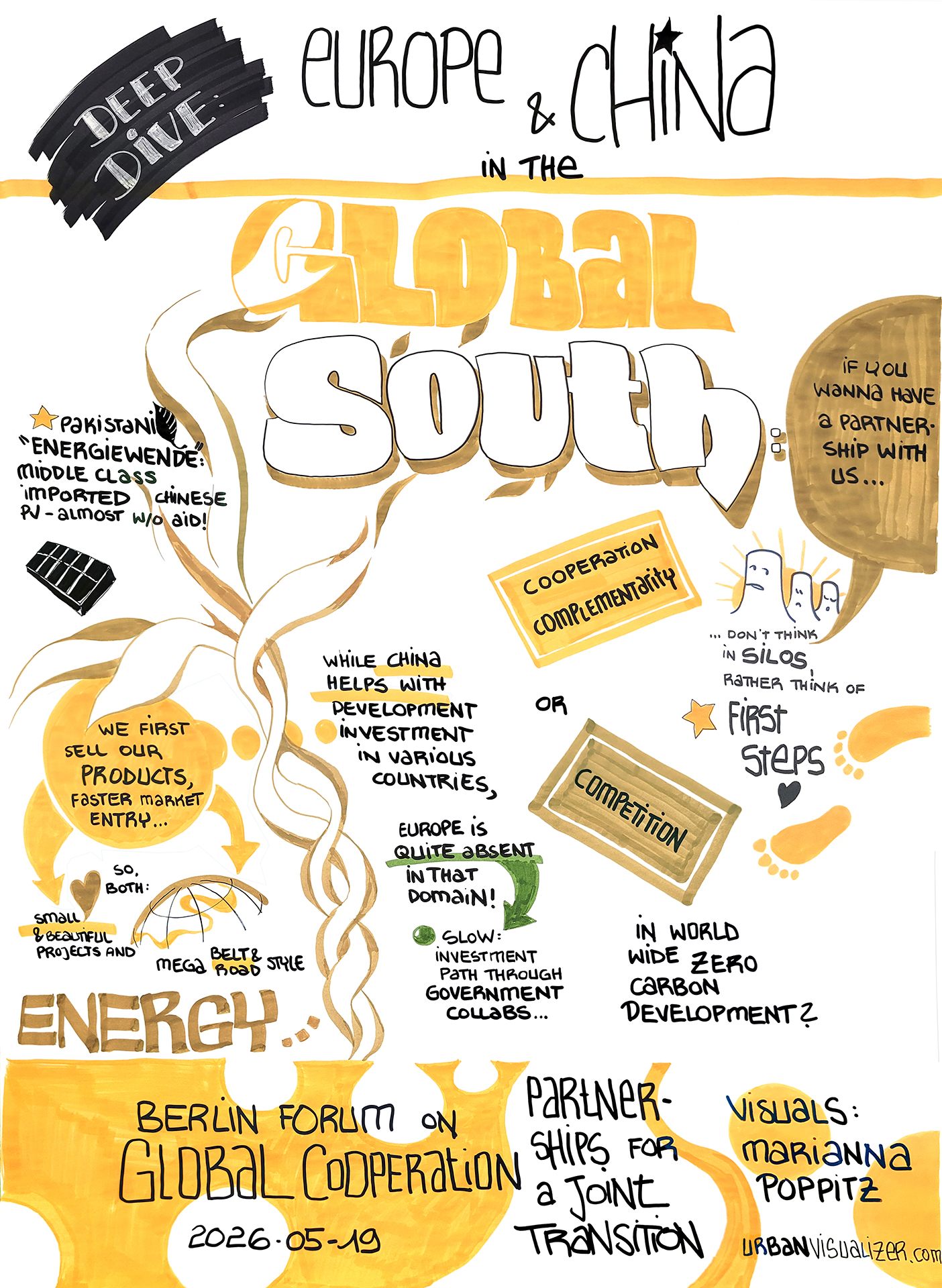
Europe and China in the Global South
How do Europe and China approach their relations with the Global South?


Photo Gallery

Review
Berlin Forum on Global Cooperation 2025
From Disruption to Transformation
Recordings
Berlin Forum on Global Cooperation 2025 - Keynotes María Fernada Espinosa & Carlos Lopes - Heinrich-Böll-Stiftung
 Watch on YouTube
Welcome and Keynotes "The State of Global Cooperation 2025"
- María Fernada Espinosa, Former President of the United Nations General Assembly; Former Minister of Foreign Affairs and of Defense, Ecuador
- Prof. Carlos Lopes, Nelson Mandela School of Public Governance, University of Cape Town, South Africa
Berlin Forum on Global Cooperation 2025 - Germany's Role in Global Cooperation - Heinrich-Böll-Stiftung
 Watch on YouTube
Germany's role in global cooperation
- Jochen Steinhilber, Director General at the Ministry of Economic Cooperation and Development, Germany
- Gregor Darmer, CEO Global Perspectives Initiative
- María Fernada Espinosa
- Prof. Carlos Lopes
Berlin Forum on Global Cooperation 2025 - Reinventing Germany’s global cooperation - Heinrich-Böll-Stiftung
 Watch on YouTube
Reinventing Germany’s global cooperation
- Ute Sudmann, Development Policy Officer, Germanwatch
- Frederike Kaiser, Member of Bündnis 90/Die Grünen, BAG Globale Entwicklung
- Jochen Steinhilber, BMZ
- Tobias Bischof-Niemz, Board Member, Enertrag
- Prof. Dr. Theo Rauch, Honorary Professor of Economic & Social Geography
Berlin Forum on Global Cooperation 2025 - Keynote Adam Tooze - Heinrich-Böll-Stiftung
 Watch on YouTube
Keynote "Sustainable development and the crisis of US hegemony"
-
Prof. Adam Tooze, Historian, Commentator, Editor of magazine "Surplus"
The presention (pdf) as well as the full transcript (pdf) of Adam Tooze's speech at the Berlin Forum on Global Cooperation 2025 are available for download.
Graphic Recordings
The four Deep Dives of the Berlin Forum 2025 were accompanied live by a graphic artist. The result is visual snapshots that summarize the central discussions, ideas and controversies of the sessions at a glance.
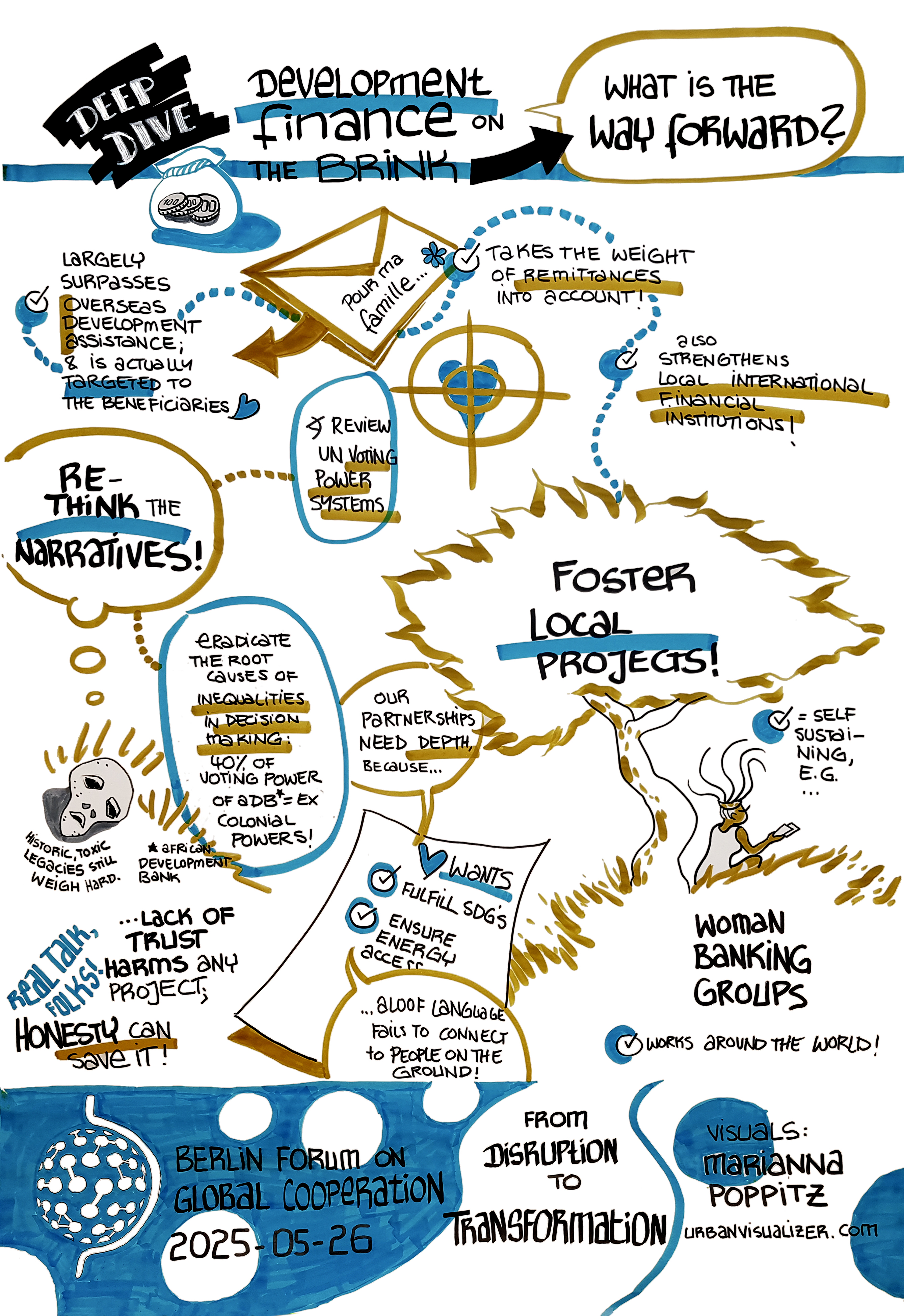
Development Finance on the Brink
New approaches to global development finance: between multilateral innovation, alliances and the end of traditional ODA.
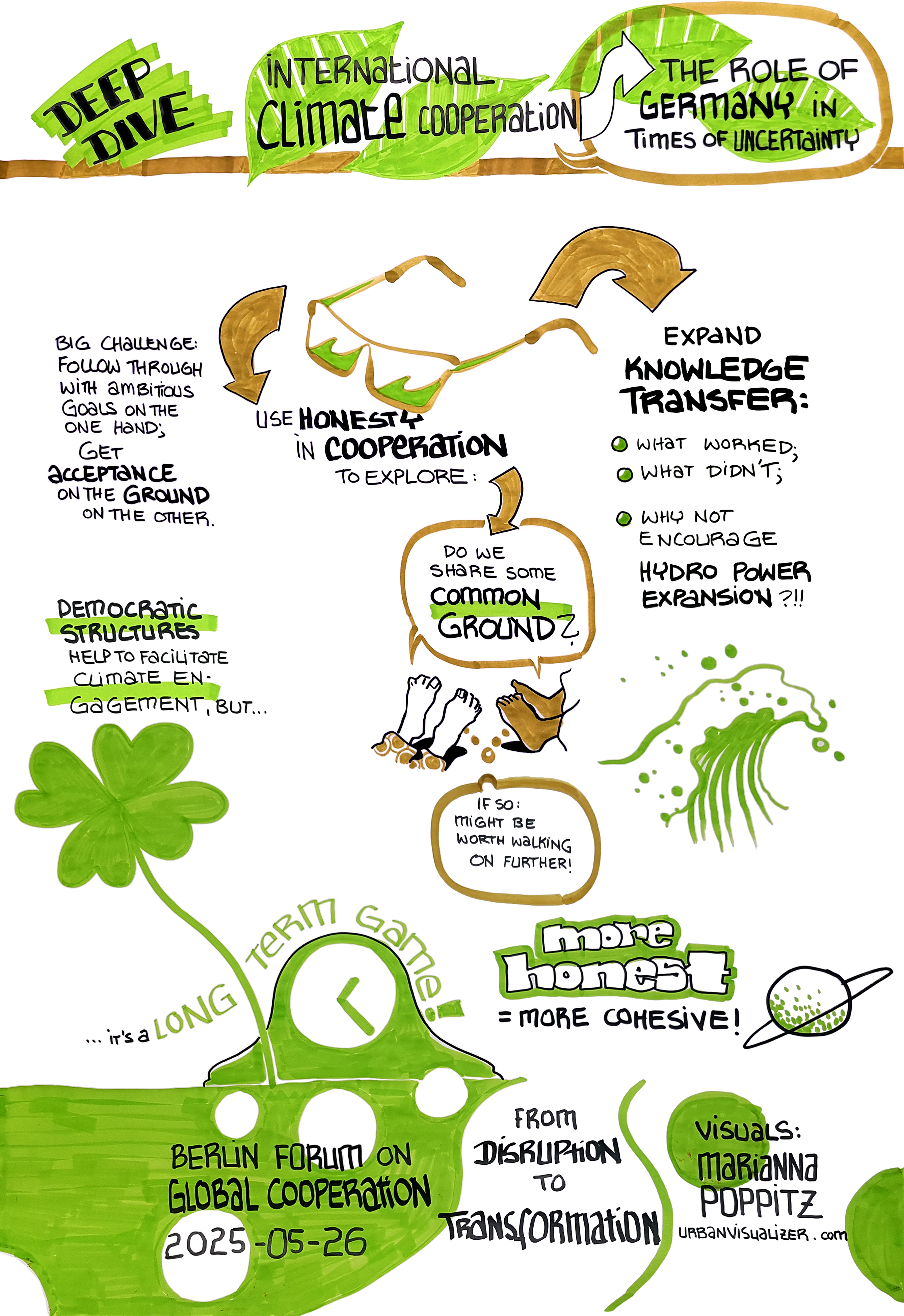
International Climate Cooperation
How can Germany redefine its role in international climate policy under geopolitical pressure?
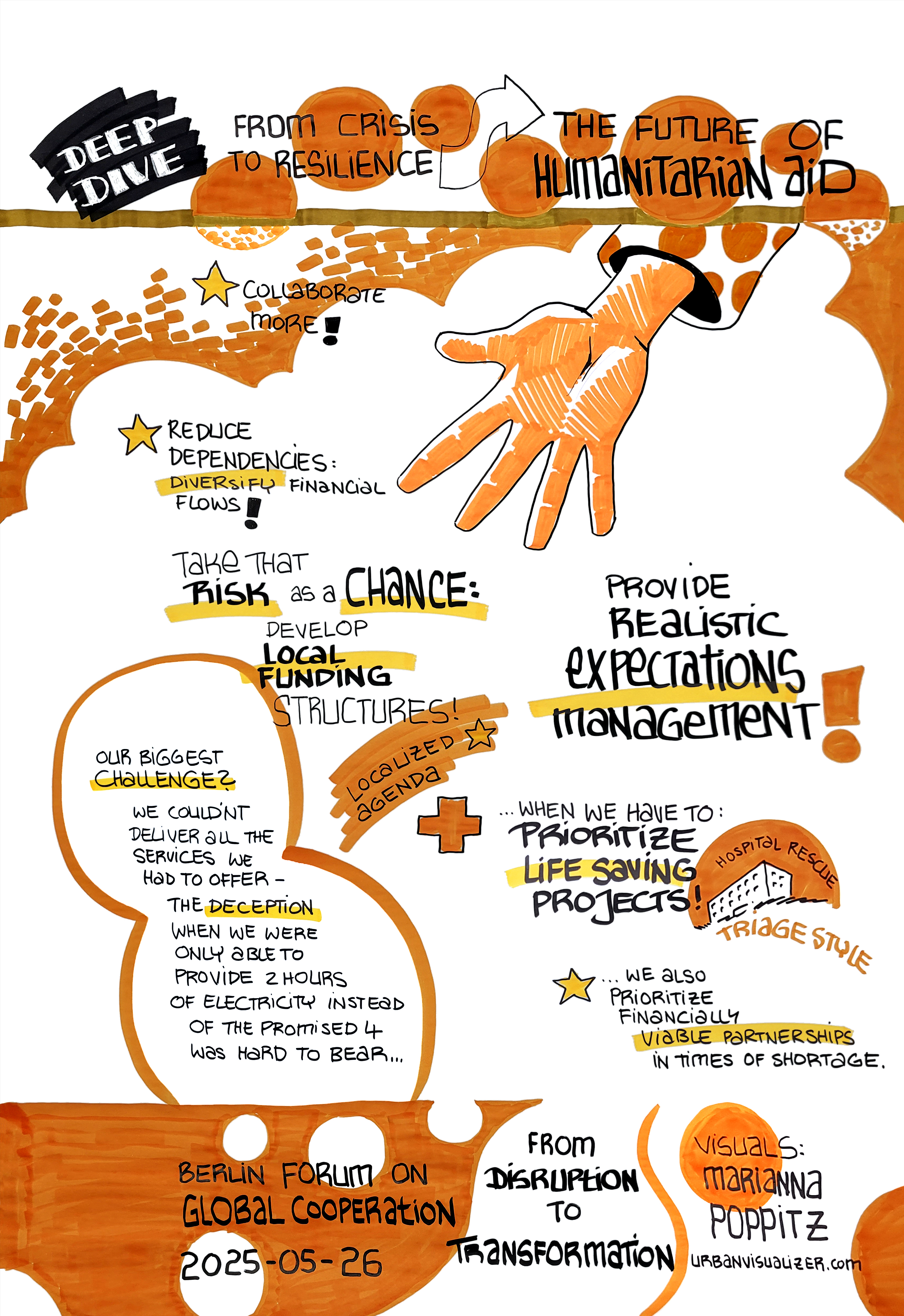
The Future of Humanitarian Aid
Humanitarian aid in transition: local actors, forgotten crises and feminist perspectives on resilience.
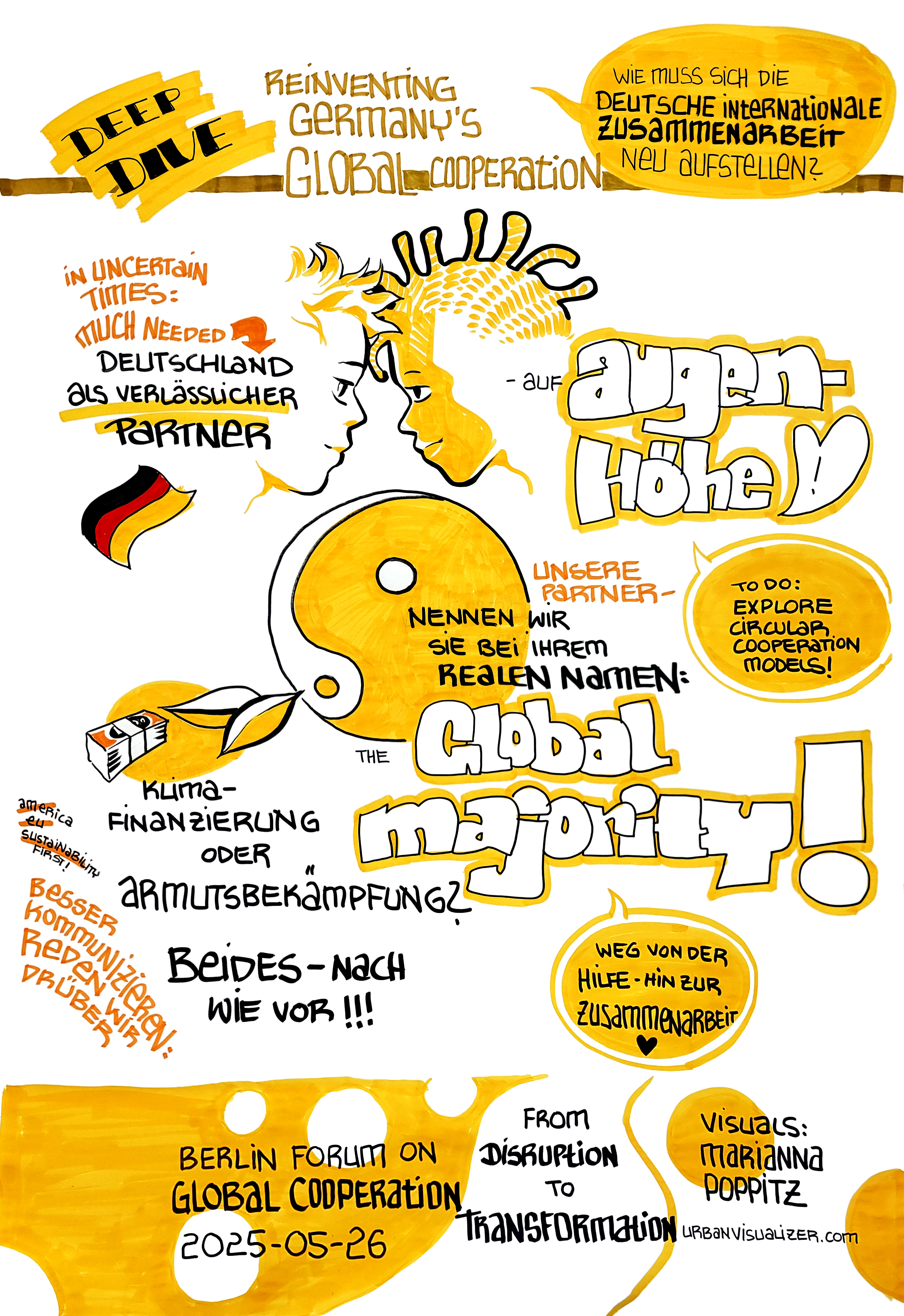
Germany's Global Cooperation
Germany's international cooperation facing a new start - between value politics, economic interests and global responsibility.
Photos


Livestreams Development Policy Discussion Days 2024
Development Policy Discussion Days 2024 - Green Industrialisation - Heinrich-Böll-Stiftung
 Watch on YouTube
Development Policy Discussion Days 2024 - In the shadow of colonial culpability - Heinrich-Böll-Stiftung
 Watch on YouTube
Development Policy Discussion Days 2024 - Conservation at what price? - Heinrich-Böll-Stiftung
 Watch on YouTube
Livestreams Development Policy Discussion Days 2023
Development Policy Discussion Days 2023 (1/3) - Feminism, free trade and political promotion - Heinrich-Böll-Stiftung
 Watch on YouTube
Development Policy Discussion Days 2023 (2/3) - Grabbing the Sunshine? A just hydrogen transition - Heinrich-Böll-Stiftung
 Watch on YouTube
Development Policy Discussion Days 2023 (3/3) - International cooperation in Afghanistan - Heinrich-Böll-Stiftung
 Watch on YouTube
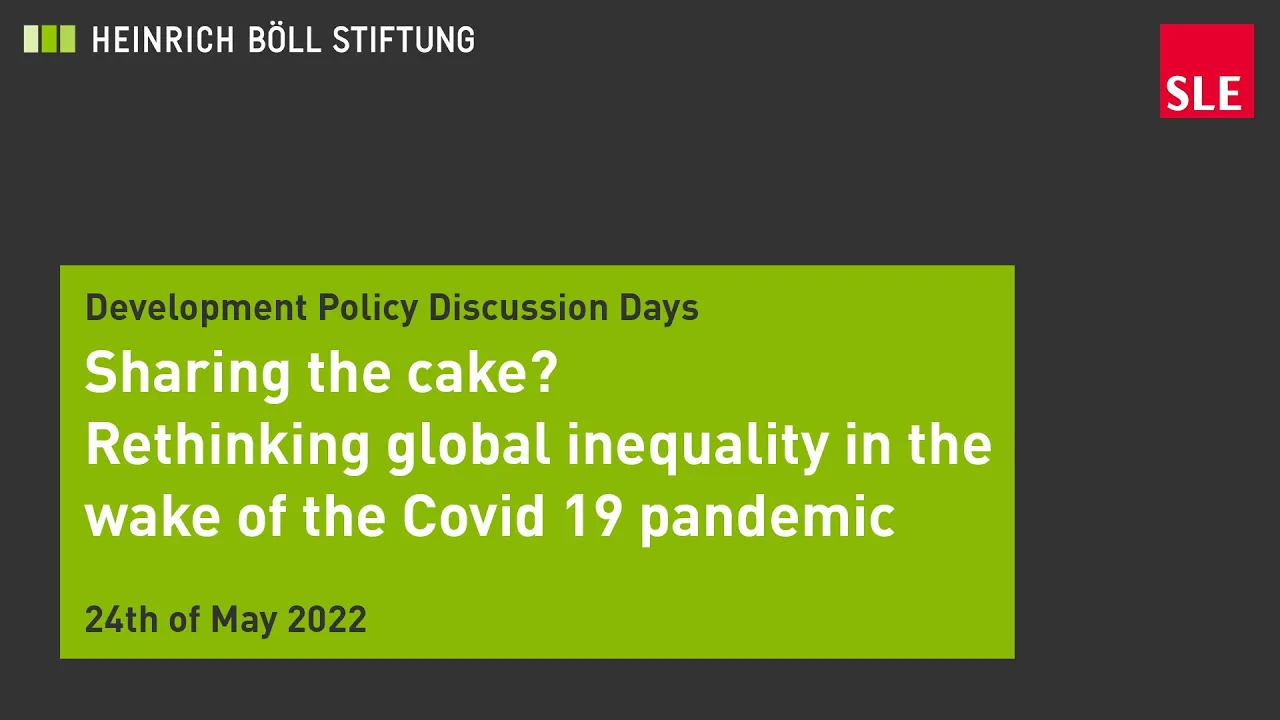
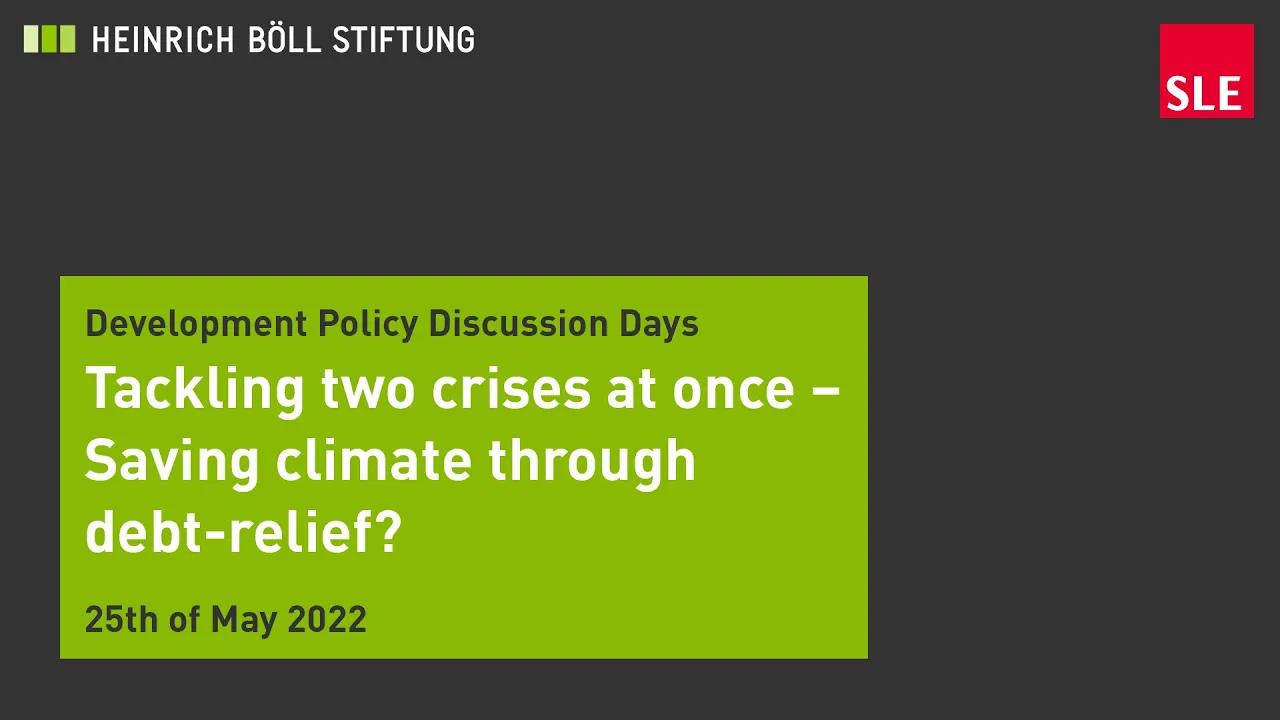
Livestreams Development Policy Discussion Days 2022
The contents of the discussion are also available in written form as briefing papers.
Journées de discussion sur la politique de développement (1/3) - Heinrich-Böll-Stiftung
 Watch on YouTube
More Content
Day #1: Entwicklungspolitische Diskussionstage 2021 (Teil 1 / Englisch) - Heinrich-Böll-Stiftung
 Watch on YouTube
Day #1: Entwicklungspolitische Diskussionstage 2021 (Teil 2 / Englisch) - Heinrich-Böll-Stiftung
 Watch on YouTube
Day #2: Entwicklungspolitische Diskussionstage 2021 (Englisch) - Heinrich-Böll-Stiftung
 Watch on YouTube


