Geoengineering

Geoengineering offers a potential solution for climate change, but it comes with far-reaching social, political, and environmental risks. Below, you will find all our articles, publications, and thematic focuses on geoengineering.
See the topic page Geoengineering

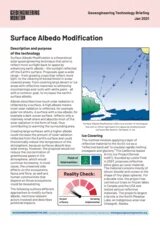
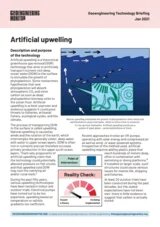
cover factsheet Surface Albedo Modification

Surface Albedo Modification and Arctic Ice Management

Published: 21 April 2026
Factsheet
Changing the surface albedo is a proposed solar geoengineering method that aims to reflect more sunlight back into space by increasing the Earth’s albedo—the reflectivity of the Earth’s surface.
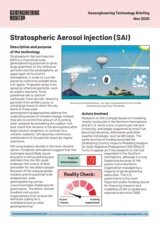
Cover factsheet Stratospheric Aerosol Injection

Stratospheric Aerosol Injection (SAI)

Published: 21 April 2026
Factsheet
Stratospheric aerosol injection is a proposed solar geoengineering method in which large quantities of tiny reflective particles are released into the stratosphere to cool the Earth by reflecting sunlight back into space.
cover factsheet enhanced photosynthesis

Enhanced Photosynthesis

Published: 21 April 2026
Factsheet
Enhanced photosynthesis techniques are theoretical geoengineering technologies based on the idea that plants and algae can be genetically modified to absorb and metabolize and therefore store more carbon dioxide.
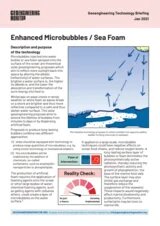
Cover factsheet microbubbles and sea foam

Microbubbles and Sea Foam

Published: 21 April 2026
Factsheet
Microbubbles proposals suggest that by injecting millions of tiny air bubbles into the ocean or spraying sea foam onto surface waters, the albedo of large areas of ocean could be increased, thereby reflecting more sunlight back into space.
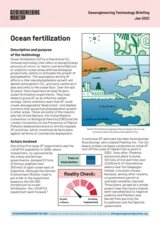
Cover Factsheet Ocean Fertilisation

Ocean Fertilization

Published: 21 April 2026
Factsheet
Ocean fertilization is a proposed method for CO2 removal in which large quantities of micro- or macronutrients are introduced into marine areas with low biological productivity to stimulate the growth of phytoplankton.
Cover Factsheet Artificial Upwelling

Artificial Upwelling

Published: 21 April 2026
Factsheet
Artificial upwelling aims to artificially pump cooler, nutrient-rich water from the depths of the oceans to the surface in order to stimulate phytoplankton activity and reduce CO2.
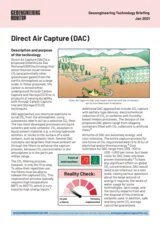
Cover Factsheet Direct Air Capture

Direct Air Capture

Published: 21 April 2026
Factsheet
Direct Air Capture (DAC) schemes aim to extract carbon dioxide and other greenhouse gases from the atmosphere by chemical and mechanical means, generally using a chemical sorbent and large fans to move air through a filter.
Cover Factsheet CCUS

CCUS: Carbon Capture Use and Storage

Published: 21 April 2026
Factsheet
Carbon Capture Use and Storage (CCUS) aims to put carbon dioxide captured from industries such as cement production to an alternative use, such as a feedstock for manufacturing products, where the carbon is then stored.     
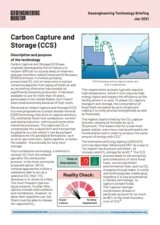
Cover Factsheet CCS

CCS: Carbon Capture and Storage

Published: 21 April 2026
Factsheet
Carbon capture and storage (CCS) is a technology proposed for the removal of carbon dioxide, which aims to capture CO2 emitted from processes such as the combustion of fossil fuels and store it underground.
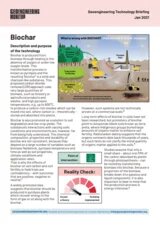
Cover Factsheet Biochar

Biochar

Published: 21 April 2026
Factsheet
Biochar is produced through pyrolysis, a process where biomass combustion occurs in a low oxygen environment at very high temperatures. It results in a solid carbon-rich charcoal-like substance, which can be mixed into soil where it is theoretically stored.

Successfully added to cart!