Mineral fertilizers have never been used as much as they are today, and in developing countries they are experiencing a renaissance. But the efficacy of mineral fertilizers and the problems they entail have long been a matter of contention. This study provides an overview of the economic and ecological potential as well as the limitations and negative impacts of mineral fertilizers in the tropics and subtropics.
Shale gas is promoted as a safe and clean energy source that can help Europe increase its energy security and provide an affordable transition to a low carbon economy. The US experience, however, has shown what serious environmental and human health concerns are related to fracking.
The concept of ‘green growth’ rests on the idea of an ‘efficiency revolution’ – climate-friendly technologies, sustainable industrial and transport sectors, and an efficient use of resources. But while vast productivity increases do indeed incentivize a more efficient use of energy, they raise demand at the same time. This paper explores the range of possible rebound effects, their quantitative extent and the difficulties encountered by political efforts to contain them.
Nearly two years after the German Government’s raw materials strategy was first published in October 2010, the present paper takes stock of how individual core elements of the raw materials strategy have been put into practice, with a focus on the promotion of foreign trade and on development cooperation.
Global struggles over access to ever-scarcer natural resources are in full swing. Power im-balances, regulatory and democratic shortcomings, unbridled corporate power and blind belief in new technologies need a counterweight.
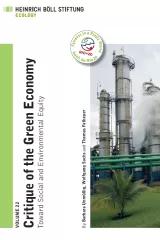
Publication Series on Ecology 22: The idea of growth as the way to end poverty and escape economic and financial crisis remains largely undisputed and is currently reflected in the concept of the green economy. But not everything that is “green” and efficient is also environmentally sustainable and socially equitable. This essay outlines a policy of less, of wealth in moderation, to enable the Earth’s resources to make a life of dignity and without need possible for all.
The current automotive crisis is not merely the result of an economic downturn, but has revealed structural flaws within the industry itself. This strategy paper analyzes the current crisis and outlines a vision of the “mobility products of the future”.
Publication Series on Ecology 3: There is growing recognition of the imperative to address the economic and environmental crises together rather than separately. This means that the solution to current economic problems lies not in pushing “shovel-ready” programs like more road building or in simply restarting the engine of consumption, but rather in laying the foundations for a fundamental green transformation.