Foreign & Security Policy
Transboundary Basin Management under conditions of Latent Conflict: A Multi-Sectoral and Multi-Disciplinary Approach towards the Kabul River Basin

Published: 31 July 2017
Keeping in view the long-time security-centred nature of Pakistan-Afghanistan relations, Kabul River Basin, a highly significant geographical and thematic area of concern, requires immediate attention of authorities. However, the issue remains virtually absent from the script of inter-state relations and diplomacy. The key proposition in this study is that if the transboundary basin management discourse about the Kabul River Basin can be changed from water-sharing to benefit-sharing across the water, food, and energy sectors, the social conditions and political will needed for long-term state-to-state engagement can be created without jeopardizing the lives and livelihoods of basin-dependent communities during the intervening period.

Water, Peace, and Security for All: The Potential for Peace building in Afghanistan’s Hydropolitics

Published: 17 December 2016
In terms of having water resources, Afghanistan has a considerable advantage in comparison to its neighbors. However, war and other various factors have limited the country’s ability to make use of these resources. Water infrastructure—including dams, water storage tanks, irrigation and water supply networks, hydrometric stations and metrology systems, and sewage and sanitation systems—is limited and inefficient.

Cooperation between Afghanistan and Pakistan Civil Society Organizations for Prevention of Crisis

Published: 14 December 2016
In recent years, the role and position of civil society organizations in dealing with local and regional crises are seen considering a new approach that requires finding common grounds, exchange of ideas and cooperation among civil society organizations functional in that specific region. Afghanistan and Pakistan have had complex and at times fragile political and security relations and in the meanwhile the two countries are tied in an unavoidable and undeniable trade and economic interdependency.

Security as a Commodity: Mega Events and Public Security in Brazil

Published: 29 July 2016
The private security industrie is definitely among the sectors that most benefit from mega events. Within a dubious relationship the security industry does not only supply the Brazilian State with surveillance systems and weapons, it also influences the organization of federal police and military forces.

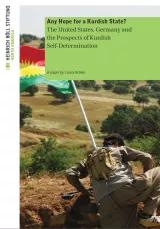
Any Hope for a Kurdish State?

Published: 14 July 2016
Iraqi and Syrian Kurds have gained increasing international recognition for their efforts in combating ISIS and some observers conclude that the conditions for an independent Kurdistan have never been as favorable as they are now. What are the prospects for a Kurdish nation state?

Blue Diplomacy: Transboundary Water Governance from a Foreign Policy Lens

Published: 7 January 2016
Water quantity and quality are deteriorating and the struggle among all common water users is likely to intensify. This may become even more visible in river basins that cross political boundaries of different countries. History reveals that in many situations, this mutual need may bring strategic cooperation rather than open conflict, and lead to peaceful solutions to water disputes. Over the last 67 years, we have witnessed only 37 severe water disputes globally, in comparison to 295 water cooperation treaties (UN Water 2008: 3).

A Transatlantic Conversation on Drone Policy

Published: 7 July 2015
Armed unmanned aerial vehicles (UAVs) — more commonly referred to as drones — have become a central pillar of the United States’ counterterrorism strategy. A number of European actors have expressed growing concern regarding the lack of transparency, accountability, and clarity surrounding the U.S. drone program. Read the joint conference report by hbs and the Stimson Center on this pressing issue here. 

Germany should support a ban on nuclear weapons

Published: 30 April 2015
The five-yearly Review Conference of the Nuclear Non-Proliferation Treaty (NPT) is taking place from April 27 to May 22, 2015. In order to increase pressure for nuclear disarmament and to strengthen the non-proliferation regime, nuclear weapons need to be banned under international law, as other weapons of mass destruction already are. A ban treaty would complement and strengthen the NPT. Germany should therefore stand up for a ban on nuclear weapons at the Review Conference.

Afghanistan’s Trans-Boundary Waters

Published: 14 April 2015
Water resource allocation is a long-ignored issue in Afghanistan. While the water potential of Afghanistan is estimated to be 75billion m3/ year on average, Afghanistan ranks lowest in water storage capacity.

Successfully added to cart!