
40 Years After Chernobyl: History and its new reality - Keynote Tatiana Kasperski (4/6) - Heinrich-Böll-Stiftung
 Direkt auf YouTube ansehen
40 Years After Chernobyl: History and its new reality - Keynote Tatiana Kasperski (4/6)
The 'Peaceful Atom' as a Tool of War in Russia's Invasion of Ukraine
- Tatiana Kasperski, Senior Researcher on Nuclear and Environmental History, Södertörn University, Sweden
„Chernobyl“ stands for far more than a reactor accident. It began on April 26, 1986, with radiation and death, the creation of an exclusion zone, and the forced short-notice resettlement of hundreds of thousands of people in the Soviet republics of Belarus and Ukraine. The catastrophe ruthlessly exposed the decay of the Soviet system.
Yet the disaster also marked a profound turning point in the awareness of both Western and Eastern European societies regarding the extreme dangers nuclear energy poses to human life and the environment. In many countries, it brought ambitious nuclear power plant projects to an end and mobilized civil movements in Central and Eastern Europe. The year 1986 thus became a watershed in society’s perception of technological progress. It was no coincidence that Ulrich Beck’s Risk Society appeared that same year, giving influential expression to growing concerns about the risks of scientific and technological modernization. At the same time, Chernobyl became a defining reference point in the political identity of the Green Party, which transformed broad public support for phasing out nuclear power into a sustained political struggle.
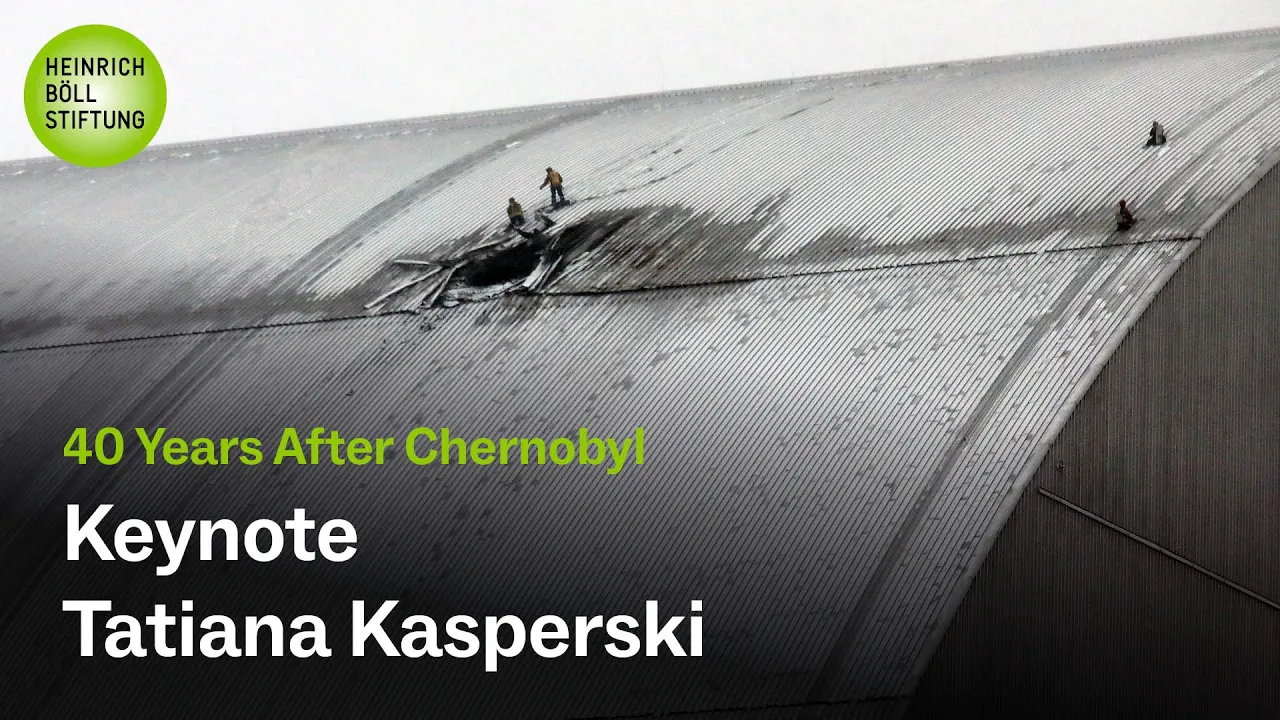
In 2026 - four decades later - the anniversary of the Chernobyl disaster is more relevant than ever. The debate over high-risk technologies has regained urgency. In its war against Ukraine, Russian forces have not only shelled the protective ‚safe confinement‘ structure surrounding the damaged reactor at Chornobyl - the Ukrainian spelling that we are going to use here when referring to the present. Russia has also occupied nuclear facilities and deliberately targeted critical infrastructure around reactors, once again playing a dangerously reckless game with nuclear safety - one that affects not only the region but extends far beyond Ukraine’s borders. The Russian nuclear industry continues to function as an effective geopolitical instrument of power. In Germany, by contrast, the issue has largely receded from public debate since the country completed its final nuclear phase-out three years ago.
What remains of Chernobyl/Chornobyl? We invite you to a discussion about green history and security in Europe.