
Analysis
While sustainability agendas are typically formulated in OECD countries, goals are set without consideration of the realities of the global urban majority living in low-income neighbourhoods. This imbalance will need to shift, considering the level to which this majority across African cities contributes to reframing the sustainability agenda.

The following case studies are summaries of an article published in the journal Environment and Urbanisation.
Re-Framing Water Infrastructural Development in Lagos
Nura Ali
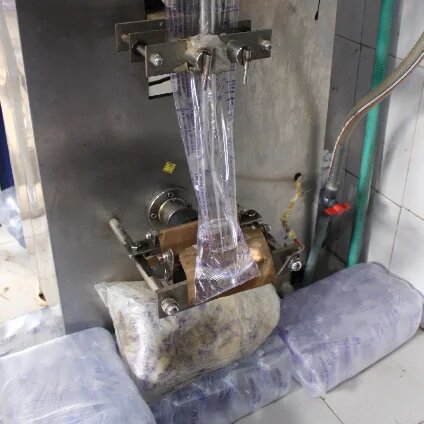
Learnings from Lagos show that sustainable solutions start from accepting and improving existing infrastructure – more so in resource-scarce settings with hybrid infrastructural coverage. In the water sector, hybridity is visible across Lagos as every household uses various sources to meet water needs: boreholes, bottled water, sachet water and piped water. Water companies that provide bottled and sachet water, the number one source of drinking water in Lagos, operate on various scales ranging from corporate to local.
In such a context of splintered urbanism and hybrid infrastructural coverage, accepting and improving existing infrastructure translates to re-enforcing local solutions to access water in low-income neighbourhoods and developing them into sustainable and long-lasting solutions. This would be a paradigm shift as bottom-up solutions are often overlooked in urban planning and development in Lagos.
In Makoko/Iwaya and other low-income coastal communities in Lagos and other parts of West Africa, local water producers hold expertise about soil quality, geology, and borehole drilling techniques. Tacit knowledge and expertise – drilling and treatment techniques, site selection, chemicals used – and lab results may be shared among local producers through associations or word of mouth. This ensures boreholes are deep enough to avoid contamination and that treatment aligns with NAFDAC regulations1.
Water quality will meet customer expectations in a context of economic deprivation, where health is generally tied to financial means.
The City Water Resilience Approach (CWRA)2 identifies water-resilient governance as one of the most important features of urban water resilience, along with how cities learn from and react to water stresses and shocks, minimise economic disruption and enhance community well-being. While CWRA recognises the role of public entities in water provision, along with enhanced community and industry engagement3, it notes that official urban practices rarely integrate tacit local knowledge4. Such integration of tacit knowledge makes particular sense in high-population, low-income neighbourhoods such as Makoko where public water taps are either vandalised or discontinued.
Local water producers whose products are used by Makoko residents and nearby neighbourhoods mostly operate in Iwaya. The most popular company called 'GL Water' sells water sachets and bottled water in Makoko and other Lagos neighbourhoods. GL Water quality meets the standards of the NAFDAC and staff are regularly trained on water safety and regulations by the Lagos state government. Water distributors know that GL Water quality will meet customer expectations in a context of economic deprivation, where health is generally tied to financial means. Distributors buy from producers such as GL Water and sell directly or wholesale to smaller sellers who make a minimal profit, providing affordable quality.
Contrary to government claims, local producers are open to collaboration, understanding the importance of safe water for community well-being. But residents' trust in government has been eroded by years of absenteeism and, in some cases, state violence. Government tiers would need to embed existing infrastructure and co-produce future-proof systems for fair provision and safety. Transparent collaboration between local providers, governments and NGOs would reduce waste and contamination. Working with local experts through co-production can help climate-proof Lagos water infrastructure, where public supply meets less than a third of needs and is shrinking5.
An Integrated and Inclusive Infrastructure Framework (3IF) for Under-Resourced Neighbourhoods in Nairobi
Margarita Garfias Royo, Jack Campbell Clause, George Arabbu Ndege
The Integrated and Inclusive Infrastructure Framework (hereafter, 3IF) was co-created by a multi-agency coalition6 for engaging Kenyan residents in neighbourhood upgrading. It supports the development of policies, planning, design and implementation of upgrading projects in low-income informal neighbourhoods, to reduce inequality and promote shared prosperity. It does so through a set of principles and ‘tactics’ that understand infrastructure from an informed point of view. As Kenya continues to invest heavily in infrastructure and services, the 3IF aims to ensure that funds are spent in ways that benefit the community and set a standard that other African cities can emulate, starting with East Africa.
Nairobi County uses a tool called Special Planning Areas (SPAs) to implement “special” conditions for areas requiring a non-standard approach, usually low-income neighbourhoods. The Mukuru Special Planning Area (MSPA) is an example of such approach7, which used large-scale mobilisation for a community-wide consultation for inclusive urban development8 between 2017 and 2020. The MSPA shows how residents, support organisations and stakeholders can push to declare their neighbourhood an SPA, using data, exercising political rights and proposing alternatives and to engage, once declared, in a collaborative planning process with the County government. In the MSPA, negotiations with the roads authority and the inter-stakeholder groups led to a balance between relocating people and providing good and adequate infrastructure.9
As Kenya continues to invest heavily in infrastructure and services, the 3IF aims to ensure that funds are spent in ways that benefit the community and set a standard that other African cities can emulate, starting with East Africa.
The 3iF seeks to enable inclusive processes like SPAs as well as disrupt the notion of what infrastructure seeks to achieve and who should benefit. This became necessary in 2020, when Kibera, an informal settlement in Nairobi, was declared an SPA by the Nairobi Metropolitan Services without applying the required engagement and consultation process and with much less of the groundwork compared to MSPA. Under the SPA, all development in Kibera was meant to pause for 2 years to enable a participatory planning process. In 2021, far from pausing, an urgent road building initiative was launched through presidential decree, using its own “special” parameters. Due to the “special” (presidential) nature of these parameters, meaningful participation, consultation and even public notice were bypassed, resulting in the clearing of the full road reserve area with little to no discussion or engagement. The 3IF is a tool for decision-makers to improve the lives of the urban poor and see them as an asset rather than a liability, like in the case of Kibera SPA. A key principle of the 3IF is a meaningful participation from all stakeholders, including residents, in infrastructure planning and implementation. This ensures projects respond to community needs and foster ownership.
‘Upgrading’ Existing Housing Stock in Johannesburg
Jhono Bennett and 1to1
‘Upgrading’ in South Africa used to primarily focuse on housing, services and tenure10 through the Reconstruction and Development Programme (RDP). Learnings from this programme led to engaging critically with the terms and regulations of such 'upgrading' processes. Occupied buildings can address some challenges of sustainable urban development, as they require fewer physical resources to ‘upgrade’, emitting less embodied carbon than new construction. They also offer appropriate density and prime locations for in-situ development.
Bertrams, a suburban area east of Johannesburg’s inner city, consists mainly of low to medium-density residential developments. Its centre holds a cluster of abandoned buildings used by residents in various ways through mixed tenure arrangements over decades11. This led to neglect of the mostly multi-storey walk-up apartments and health and safety risks. Over the last decade, many residents were forced out through City-led evictions, while others face ongoing displacement threats12.
Community-based organisations have maintained buildings and built solidarity networks despite government resistance and emerging vigilante groups.
The non-profit organisation 1to1–Agency of Engagement, with the community-based Inner City Resource Centre, used city policy mechanisms and tactical activism to change how Johannesburg engages with residents of occupied buildings. Their multi-year approach includes co-designing improvements, supporting residents’ committees in government engagement, enhancing safety and living conditions, and lobbying the City to value those living in unlawfully occupied buildings. While tenure remains uncertain as communities face ongoing court cases, the project aims to shift discourse citywide.
Maintaining these low-density, multi-storey buildings supports sustainable and equitable growth by offering alternatives to the sprawl of informal settlements. They provide better density, strategic location and access to services, transports and jobs. Government agencies need to value occupiers rather than criminalise them. Built environment professionals often struggle to work with such groups due to the perceived divide between ‘formal’ and ‘informal’. Meanwhile, community-based organisations have maintained buildings and built solidarity networks despite government resistance and emerging vigilante groups.
1to1's socio-technical spatial design work focuses on developing data collection systems and enhancing the skills of community facilitators and diverse leadership structures to engage City authorities, better translate these values, and build stronger precedents for practice in Bertram.
Conclusion and Outlook: Re-Thinking Funding Structures
While more participation of the urban majority is essential for sustainable urban development, the growing interest in the financial opportunities of participatory research is arguably a cause for concern, as funding is often acquired by traditionally non-participatory stakeholders. Low-income residents are often used as token representatives without real decision-making power. Funding from abroad is a major financial instrument for infrastructural development, but often sidelines local professionals or grants them only subservient seats at the table. In Lagos, those closest to low-income neighbourhoods (local governments) are least equipped to provide sustainable infrastructure. At the same time, local government autonomy13 is key to politically empowering the urban majority.
Development projects and programmes are expected to address the UN SDGs. Recognising the African Union’s regional sustainable agenda, Agenda 2063, can help funders, policymakers and practitioners identify common targets and support an Africa-led vision14. Understanding how communities are represented and identifying interlocutors for different groups and at various scales, is crucial to incorporating low-income residents' views on sustainability15.
Small and medium urban development actors - planning agencies, civil society, traditional community organisations, SMEs, and district-level governments - often lack the skills to access or manage international funding. This contributes to fragmented action, as global funding systems often work against collaboration. Funding is rarely shared with locally impactful organisations, ending up with known, often established partners. One way to counter this is to revise application structures to encourage co-produced proposals and provide support throughout the funding cycle. A system for capacity and network building is needed to identify organisations that hold residents’ trust.
The views and analyses expressed here are those of the authors and do not necessarily reflect the views of Heinrich-Böll-Stiftung.
Footnotes
- 1
Lagos State Ministry of Environment and Water Resources
- 2
ARUP. 2021. City Water Resilience Approach: Water Resilience Literature Review.
- 3
ARUP. 2021. City Water Resilience Approach: Water Resilience Literature Review, 65.
- 4
- 5
- 6
- 7
- 8
- 9
The Kenyan code for road reserves (the area reserved for all infrastructure that follows the road development such as roadways including carriageways, pedestrian ways and drainage) stipulates that roads must have a 12-metre width, which is ultimately designed for greenfield development, limiting the scope for road development in informal settlements. The code does not account for the retrofitting of alleyways and other forms of narrow pathways in access infrastructure planning. We argue that the road reserve needs to be context specific, which is something that is being missed in current planning approaches and standards. The MSPA process resulted in agreeing special Road Reserve widths, which after negotiations with the roads authority and the inter-stakeholder groups, were several metres less than Kenya’s road standards.
- 10
Cirolia, L.R., Görgens, T., Van Donk, M., Smit, W. and Drimie, S. 2017. Upgrading informal settlements in South Africa: Pursuing a partnership-based approach. Cape Town: UCT Press.
- 11
Budlender, J. and Royston, L. 2016. Edged out: Spatial mismatch and spatial justice in South Africa’s main urban areas. SERI: Johannesburg.
- 12
- 13
Lawanson, T. 2021. Patterns of decision making in urban local governance. Abuja: Heinrich Böll Stiftung.
- 14
Garfias Royo, M., Diep, L., Mulligan, J., Mukanga, P. and Parikh, P. 2022. Linking the UN Sustainable Development Goals and African Agenda 2063: Understanding overlaps and gaps between the global goals and continental priorities for Africa. World Development Sustainability, 1, 100010.
- 15
Garfias Royo et al. 2022. Linking the UN Sustainable Development Goals and African Agenda 2063.


