Dossier
Chornobyl: 40 Years After the Disaster
Nuclear Power in Eastern Europe
Forty years after the Chernobyl/Chornobyl reactor disaster, Russia is once again jeopardizing nuclear safety in Eastern Europe through direct attacks on nuclear power plants in Ukraine. Other countries seem largely unfazed, clinging to nuclear power and planning new reactors. Our dossier highlights how selected countries look back to this historical turning point and deal with nuclear energy today.


Video Recordings of the Event
40 Years After Chernobyl - History and its new reality
40 Years After Chernobyl: History and its new reality - Welcome, Reading and Discussion (1/6) - Heinrich-Böll-Stiftung
 Watch on YouTube
40 Years After Chernobyl: History and its new reality - Keynote Frank Uekötter (2/6) - Heinrich-Böll-Stiftung
 Watch on YouTube
40 Years After Chernobyl: History and its new reality - Keynote Carla Reemtsma (3/6) - Heinrich-Böll-Stiftung
 Watch on YouTube
40 Years After Chernobyl: History and its new reality (3/6)
Chernobyl and the New Generation of the Environmental Movement
Keynote: Carla Reemtsma, Climate Activist and Spokesperson for Fridays for Future Germany
Recording from April 23, 2026
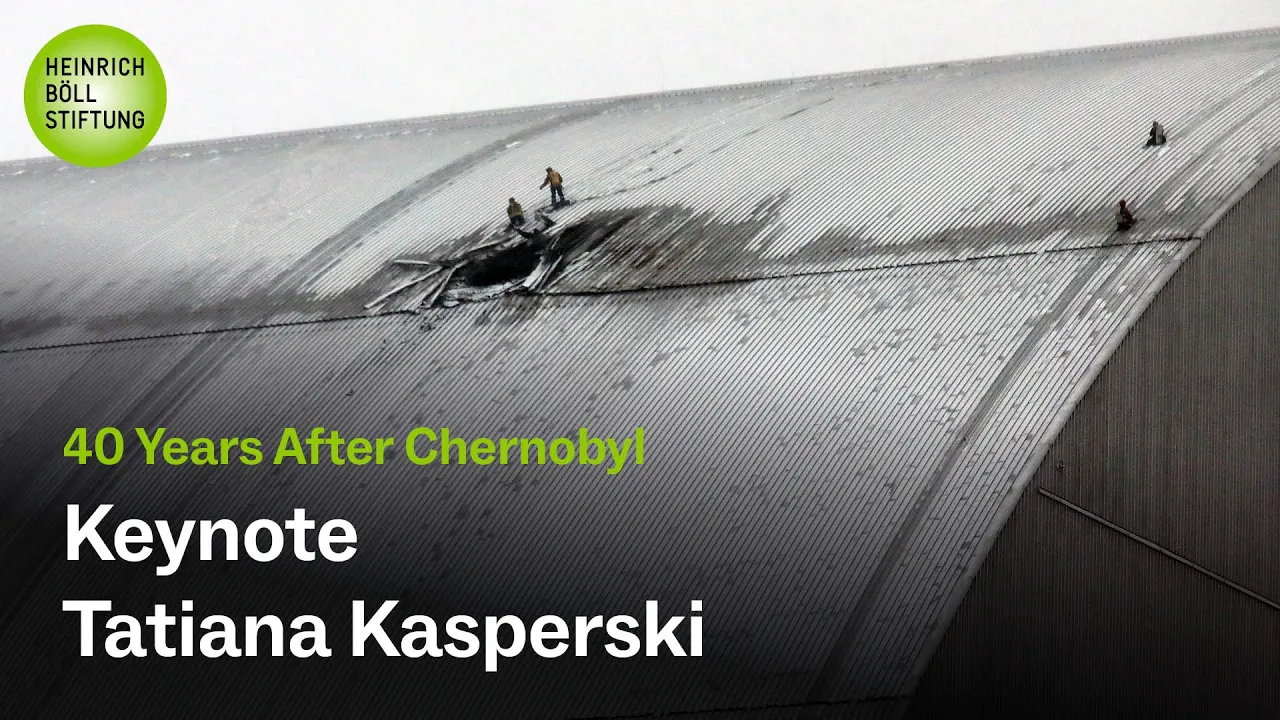
40 Years After Chernobyl: History and its new reality - Keynote Tatiana Kasperski (4/6) - Heinrich-Böll-Stiftung
 Watch on YouTube
40 Years After Chernobyl: History and its new reality (4/6)
The 'Peaceful Atom' as a Tool of War in Russia's Invasion of Ukraine
Keynote: Tatiana Kasperski, Senior Researcher on Nuclear and Environmental History, Södertörn University, Sweden
Recording from April 23, 2026
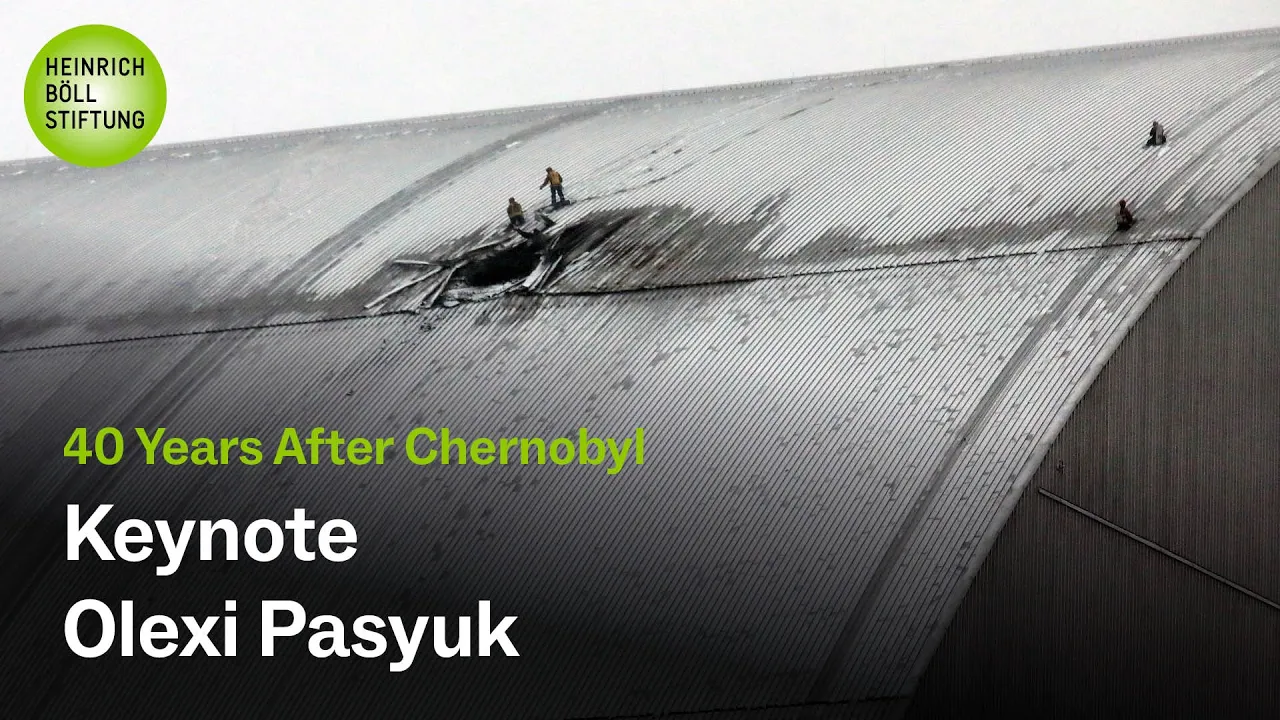
40 Years After Chernobyl: History and its new reality - Keynote Olexi Pasyuk (5/6) - Heinrich-Böll-Stiftung
 Watch on YouTube
40 Years After Chernobyl: History and its new reality (5/6)
Déjà vus in Ukraine? Nuclear Safety in the Russian War of Aggression
Keynote: Olexi Pasyuk, Director, Center for Environmental Initiatives "Ecoaction", Ukraine
Recording from April 23, 2026
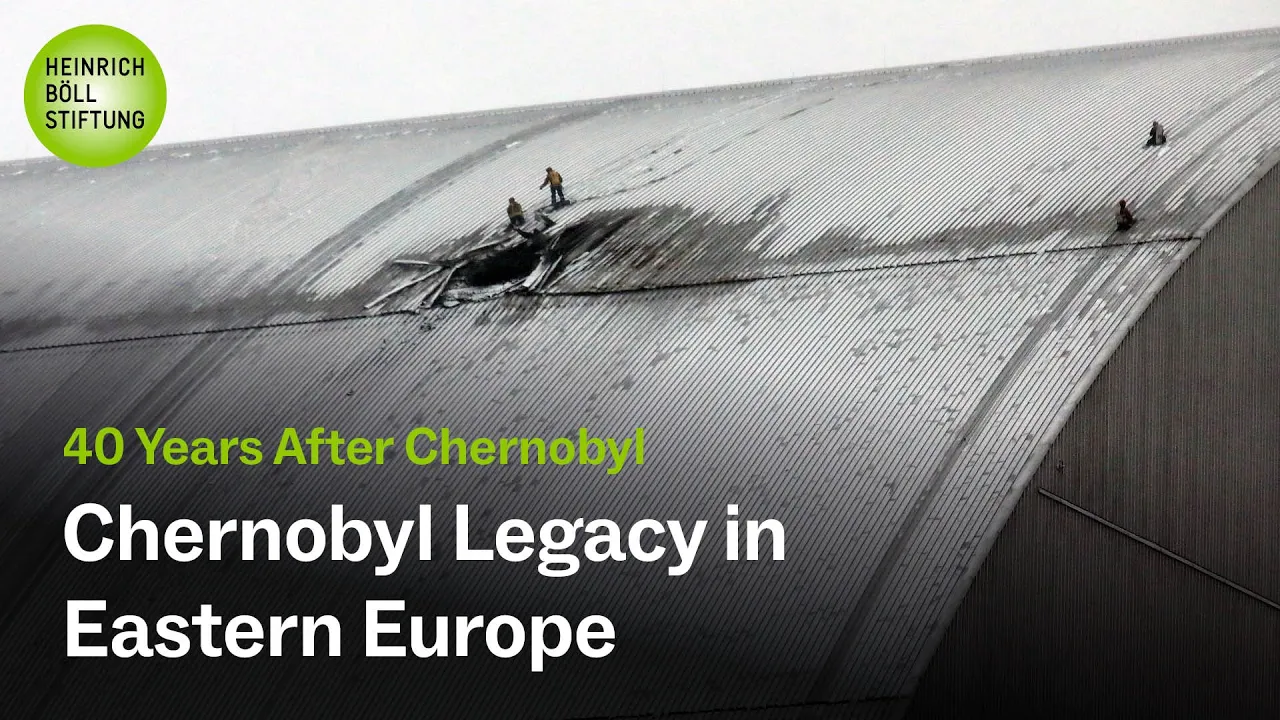
40 Years After Chernobyl: History and its new reality - Chernobyl Legacy in Eastern Europe (6/6) - Heinrich-Böll-Stiftung
 Watch on YouTube
40 Years After Chernobyl: History and its new reality (6/6)
Panel 2: Nuclear Energy, Risk Technologies, and the Green Movement in Germany Between Past and Present
Recording from April 23, 2026
Impressions From the Event

The Chernobyl Nuclear Disaster of 1986: Key Facts at a Glance
What is Chernobyl/Chornobyl?
“Chornobyl” is the name of the Ukrainian town near which a large nuclear power plant, consisting of four reactors, was built starting in the 1970s. During the Soviet era, however, reports on nuclear power and this location were primarily written in Russian, leading to the Russian transcription of the place name, “Chernobyl,” becoming established in German as well.
Today, however, the term is commonly used to refer to far more than just the place itself; it serves as a symbol of the historical rupture caused by the severe reactor accident at this site on April 26, 1986, and its consequences for large parts of Europe.
The Reactor Disaster
On April 26, 1986, a runaway operational test in Unit 4 of the nuclear power plant led to a catastrophic meltdown - the “worst-case scenario.” Increasingly hot steam built up in the reactor vessel and eventually blew apart the containment structure. The reactor core caught fire, and highly contaminated steam rose for weeks as a radioactive cloud that initially spread with the winds to the northwest, toward Belarus, and in the days that followed, over large parts of Europe. No one was prepared for such a catastrophic scenario.
The Radiation
Twenty-three different radionuclides were released by the explosion and the subsequent fires. Above all, highly radioactive iodine-131, which can cause severe disruption of thyroid function, proved fatal to the “liquidators” deployed on site for disaster response and firefighting. However, the half-life of iodine-131 is only eight days, so for long-term contamination - particularly in affected agricultural areas and the exclusion zone - cesium, plutonium, and strontium are primarily responsible, as in some cases they remain radioactive for thousands of years.
In the first month after the disaster, 31 people died directly from radiation sickness, with many more dying later. In total, approximately 2 million people were exposed to radiation, and many of them subsequently developed cancer or other illnesses. In 1986, fresh fruits and vegetables were contaminated by radioactive fallout across large parts of Europe.
The Containment Structure
The melted nuclear fuel and reactor debris left at the site will remain a dangerous source of radiation for centuries. To prevent further radiation from escaping into the atmosphere, operators quickly built a meter-thick concrete shell - commonly known as the “sarcophagus” - around the accident site.
Because workers could only be exposed to the high radiation levels on site for short periods, tens of thousands of workers from across the Soviet Union took turns working there. Many sacrificed their health to prevent an even greater radiation disaster.
However, the structure proved to be unsound in the long term. In the 2010s, with technical and financial assistance from around the world, a second, much larger protective shell - the “New Safe Confinement” - was built over the old sarcophagus. It includes large cranes to gradually dismantle the old concrete structure, which was in danger of collapsing.
The Consequences for the Region
More than 300,000 people were evacuated from contaminated areas, primarily from the exclusion zone within a 30-kilometer radius of the power plant. Among them was the “nuclear city” of Pripyat, newly built at the time for the plant’s employees and their families. Some 50,000 people were evacuated from the city within a few hours on April 27, 1986, leaving virtually all their belongings behind.
However, with the evacuation of centuries-old settlements, including the eponymous city of Chornobyl, the disaster also marked the end of the region’s distinct cultural history in Polissia. Some people later returned to their abandoned homes.
Today, Chornobyl is considered a temporary settlement for workers who are periodically employed at the former power plant. Outside the exclusion zone, a new city - Slavutych - was built in record time between 1986 and 1987, using prioritized construction resources from across the Soviet Union for the employees still needed at the plant.
The remaining undamaged reactor units of the same type continued operating until the 1990s. Thousands of people are still employed there.
Causes, Responsibility, and Consequences
The Soviet leadership downplayed the accident. Data and facts about the incident were kept under wraps. Publicly, the disaster was primarily blamed on the technicians, who were said to have operated the reactor incorrectly. The liquidators became the new heroes and stood at the center of the memory of the accident.
However, documents from investigations into the cause of the accident, which became public after the collapse of the Soviet Union, revealed that serious design flaws and inadequate safety tests - particularly following earlier minor accidents involving the same reactor type - were the primary causes. Presumably, time pressure from construction schedules dictated by the Kremlin and budget constraints on necessary testing played a significant role.
The cover-up and the deliberate endangerment of the population - for example, by holding the traditional May Day parade in Kyiv or continuing to distribute radioactively contaminated food - contributed significantly to the discrediting of Soviet power and ultimately to its collapse.
Shaken Faith in Technology
Around the world, no one had thought such a disaster possible. In many countries, reactor construction was halted after Chernobyl - skepticism among large segments of the population had grown too strong. For many years, the disaster mobilized people to advocate for environmental protection and democracy, as well as for transparency and access to environmental information.
Chornobyl Amid Russia’s War of Aggression
Immediately after the start of Russia’s full-scale invasion of Ukraine on February 24, 2022, the nuclear power plant site was occupied by Russian troops for around four weeks. The invaders were apparently unaware of the sensitivity of the site and the ongoing radiation risks. Critical equipment required to operate the sensitive facilities was looted.
They moved without any protection in the heavily contaminated area, dug trenches, and set forests on fire - releasing a new cloud of radioactive dust. Once again, a totalitarian regime in Moscow showed no regard for the lives and health of the local population, not even for those of its own soldiers, many of whom subsequently had to be treated for radiation sickness.
In February 2025, Russia carried out another act of nuclear terrorism: the reactor’s new protective shell was severely damaged in a drone attack.