
Background
In Brazil, 'food culture' is a complex concept showing how societies produce and prepare their food. Originating in the Amazon, the concept of cultura alimentar evolved over a long period before achieving global recognition. It firmly connects the right to food with the protection of traditional knowledge and community self-determination.

Food Insecurity and the Erosion of Cultural Food Practices
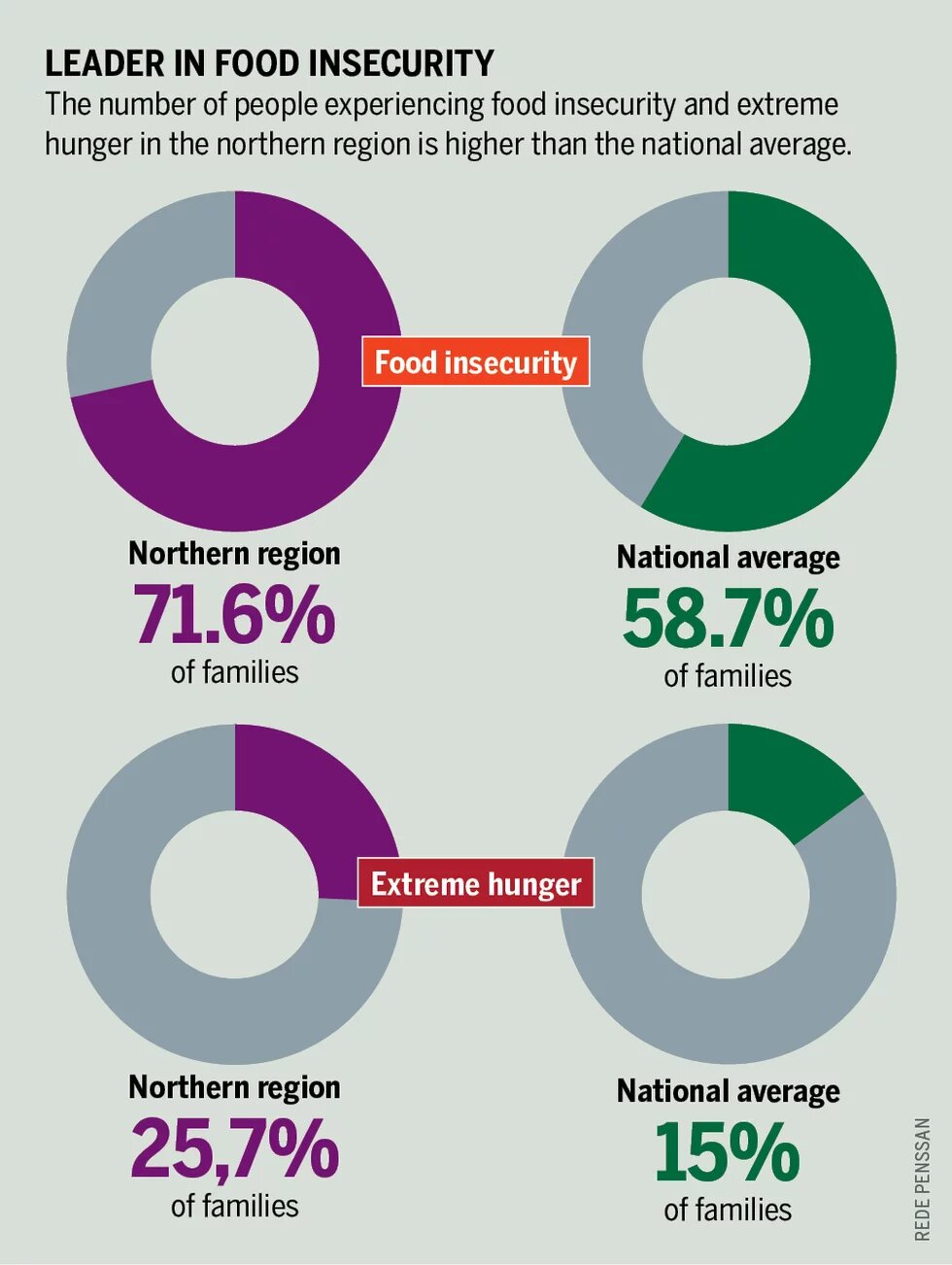
In 2021, the Observatory for the Human Right to Adequate Food and Nutrition of the University of Pará (Observatório de Cultura Alimentar e Direito Humano à Alimentação e Nutrição Adequadas, OCADHANA - UFPA) published the first survey on food insecurity among indigenous populations living in urban areas of Brazil. Preliminary results revealed that 70% of the Indigenous population dwelling in Belém, Pará, were experiencing hunger, and that at least 40% of children were consuming no more than two meals a day. This context of food insecurity highlights a series of complex issues, including the disruption of these peoples’ cultural food practices.
Until 2013, food culture was not officially recognized as a cultural expression in Brazil. There was no investment in food as culture, whether through public funding, grant programs, or similar mechanisms. The concept was formally acknowledged that year during the III National Conference on Culture, when a motion was approved introducing the notion of food culture. In the decade of the 2000s interviews were conducted with communities in the Marajó region as part of the participatory cultural mapping specifically of the food cultures in Pará. These conversations revealed that the term “gastronomy” did not resonate in that context, as it failed to capture the depth and complexity of the knowledge, technologies, metaphysics, practices, spirituality, handicraft, territorialities, movements, identities, and diversities that shape food – especially among Indigenous peoples and traditional communities. They further lead to the introduction of the concept of food culture.
Beyond Gastronomy: Food Culture as Knowledge, Resistance, and Rights
Treating gastronomy as a synonym for culture proved incoherent. The term, by its very etymology, refers to a science. Moreover, not all practices associated with gastronomy justify its classification as a cultural expression. Fast food, genetically modified foods, and synthetic substances, for instance, are examples of practices that lack the symbolic and identity-related dimensions that underpin the concept of culture.
However, the illusionism of agri-food empires has historically worked to equate gastronomy with culture, even though these same systems are responsible for the expropriation of cultural and genetic heritage and for exercising symbolic domination. Where they take over local cultures, they face resistance: intellectuals, advocate for the concept of food culture also to clearly distinguish it from gastronomy. Food culture is anchored in a framework of rights, grounded in international protocols and agreements to which Brazil is a signatory.
From the Amazon to Global Policy: Food Culture, Biodiversity, and Climate Justice
From the Amazon to the world, food culture points have emerged – spaces guided by organizational principles distinct from those of conventional restaurants. Today, some of these food culture points have been consolidated in Brazil for over 15 years. One of the most prominent and successful examples is Iacitatá Amazônia Viva, located in Belém.
It is important to highlight the direct contributions of the concept of food culture to food security and sovereignty. These include the decriminalization of artisanal products from Brazilian family farming, advocacy for the revision of the basic food basket to include items such as cassava and its derivatives, the establishment of the Permanent Commission for Food Culture, and the guarantee of representation on the National Council for Food and Nutrition Security.
Internationally, the concept of food culture was included in the Aichi Biodiversity Targets (2010–2020), established during COP10 on biodiversity. These targets outlined concrete actions to halt the global loss of biodiversity. Food culture is now recognized as a safeguard for the protection and promotion of Brazilian socio-biodiversity and for the reduction of climate change impacts. Furthermore, the Food and Agriculture Organization of the United Nations has begun to recognize food culture as a key pillar in the fight against hunger and in the pursuit of food sovereignty. The concept has also contributed to discussions within the International Treaty on Intellectual Property and Associated Traditional Knowledge (WIPO/2024).
In 2023, during the National Conference on Food and Nutrition Security, the Free Conference on Food Culture was held, where the concept of food culture was collectively redefined in plenary as: to know, to do, to speak, to cultivate, to create, to prepare, to care for, to heal, and to enchant. This renewed definition embraces ancestry, spirituality, territoriality, and central symbolic and identity-based dimensions. As such, food culture is understood as a set of practices, manifestations, and cultural expressions related to food that intersect with productive, socioeconomic, health, and human rights dimensions, as well as socio-environmental and climate justice, land and territory issues, and the struggles against misogyny, patriarchy, structural racism, and the criminalization of artisanal and religious food practices.
Therefore, food culture is inseparable from food security, the self-determination of peoples, and the pursuit of good living. However, the Ministry of Culture has made only limited progress and has merely acknowledged the political significance of this issue, particularly for Indigenous peoples and traditional communities, with special emphasis on the Amazon region.

The article was first published in the Brazilian Amazon Atlas
Click here for the English edition of the atlas.


