
Analysis
Europe’s agriculture depends on fossil-based fertilisers, making it vulnerable to price and supply shocks. While CBAM dominates the debate, wars, markets and political inaction drive prices. How can the EU finally build a more resilient and sovereign food system?

With the recent fertiliser price spikes and import restrictions due to the Carbon Border Adjustment Mechanism (CBAM), which entered its definite phase in January this year, as well as the ongoing war in the Middle East, conventional farmers in Europe are getting worried. Even though many will have bought enough fertiliser for the upcoming sowing season, buying stocks for later this year or next year might become quite costly. In this context, it’s not surprising that the European farmers‘ association COPA-COGECA is demanding a complete suspension of CBAM and making supply security its key demand for the EU Fertiliser Action Plan (PDF), which the EU Commission has announced to publish in the second quarter of 2026.
While fertiliser imports from Russia made up 17 per cent of total EU fertiliser imports in 2022, the share grew to about 30 per cent in 2025.
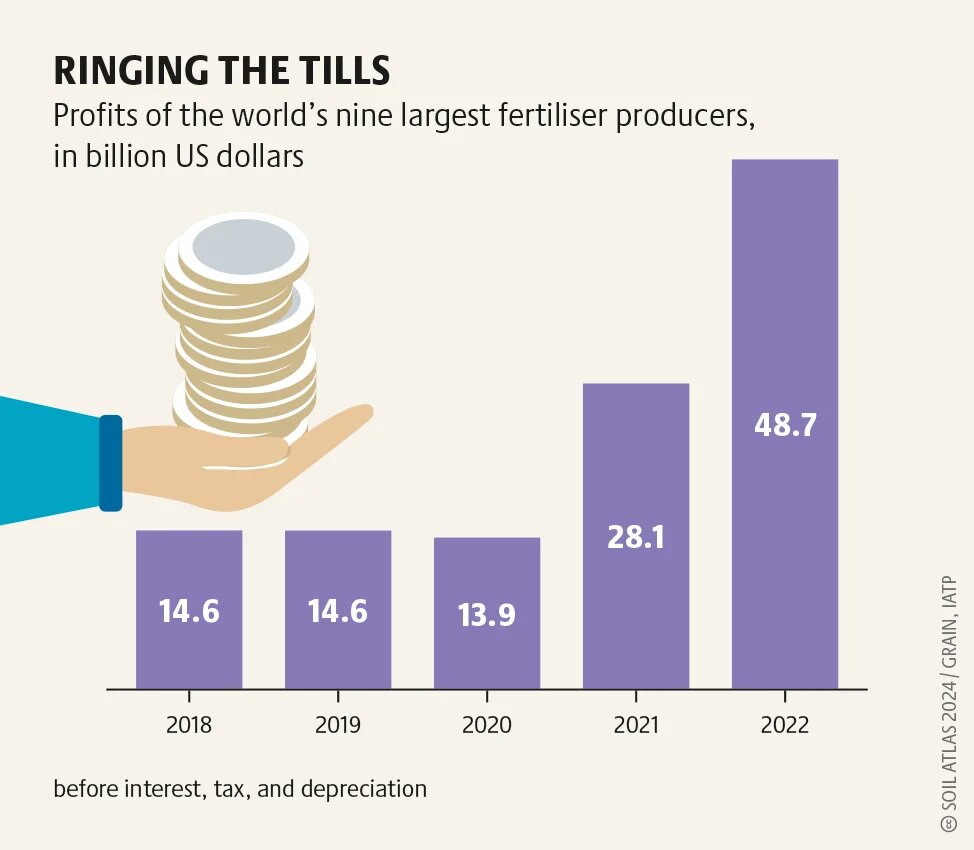
Yet, the simple suspension would miss the root cause of the current crisis: the dependency of European agriculture on fossil fuel-based fertilisers. And Europe’s leaders have failed at systemically tackling this issue. Only four years ago, we saw very similar dynamics after Russia’s full-scale invasion of Ukraine: since synthetic nitrogen fertiliser - the most widely used type of fertiliser - needs fossil gas as a feedstock, fertiliser prices followed the gas price spikes. For European farmers, nitrogen fertiliser prices increased by 149 per cent from September 2021 to September 2022, even though fertilisers were excluded from any EU sanctions on Russia until June last year. This actually made Russian fertiliser producers beneficiaries of the war: While fertiliser imports from Russia made up 17 per cent of total EU fertiliser imports in 2022, the share grew to about 30 per cent in 2025. And with the current crisis, Russia is well positioned to convince EU states to loosen sanctions. Internationally, the big winners of the 2022 fertiliser crisis were the largest fertiliser companies, namely Nutrien, CF Industries, Mosaic, Yara and others. On average, the nine largest fertiliser companies could increase their profit margins to 36 per cent in 2022 compared to the previous year. Currently, we’re already seeing major gains for stocks of producers like CF Industries and Nutrien.
Price Pressure on Fertilisers: CBAM and the Hormuz Blockade
So, what’s the impact of CBAM on the European fertiliser supply and fertiliser prices? The CBAM regulation makes importers of carbon intensive products pay for embedded emissions, ensuring that European producers – which are required to pay for carbon under the Emissions Trading System (ETS) – are not disadvantaged by carbon intensive imports into the EU. Insofar, it actually makes sense that fertiliser imports have gone down, according to COPA-COGECA by 80 per cent this January compared to imports in January 2025. However, this figure ignores the fact that only a month before that, imports were much higher compared to the previous year . Additionally, a brief by Sandbag has debunked the assumption that CBAM will be a major driver of fertiliser prices: The independent thinktank has calculated that the inflationary impact of CBAM on the market price of urea fertilisers is likely to be between €1.40 and €1.79 per ton. With economic risks so limited, it would be a missed opportunity for more independence and resilience of the European market if EU member states decided to exempt fertilisers from CBAM.
The impacts of the current US-Israel-Iran war on the fertiliser supply and prices are likely to be much more severe. With an abundance of cheap natural gas, the countries around the Persian Gulf are key fertiliser producers and about a third of global exports of urea pass through the Strait of Hormuz that is currently being blocked by Iranian military in reaction to the US and Israeli attacks. Unlike Australia, Brazil, India and the US, European countries are not among the main importers of fertilisers from Qatar, Saudi Arabia or the United Arab Emirates. But they will still be affected by the trade disruptions: Currently, more than 1.1 million tons of fertiliser and fertiliser inputs are stuck in the Persian Gulf. As of March 26th, 2026, the price for urea has increased by more than 45 per cent since the beginning of the conflict.
How France, Germany and Poland’s Respond to the Fertiliser Crisis
This situation might hit some European countries more than others. France for instance makes up 17 per cent of the EU’s total agricultural production and is hence EU’s main agricultural power. Besides, France is the country benefitting the most from CAP subsidies, with 9 billion euros of payments per year. Despite this huge public spending, in 2022 80 per cent of France’s fertilisers were imported, highlighting its dual dependency: on third countries and on fossil fuels, used to produce fertilisers. Although in 2026, approximately 80 per cent of the country’s fertiliser needs should be covered, in the mid- and longer terms, the situation could become much worse depending on how the US-Israel-Iran war progresses.
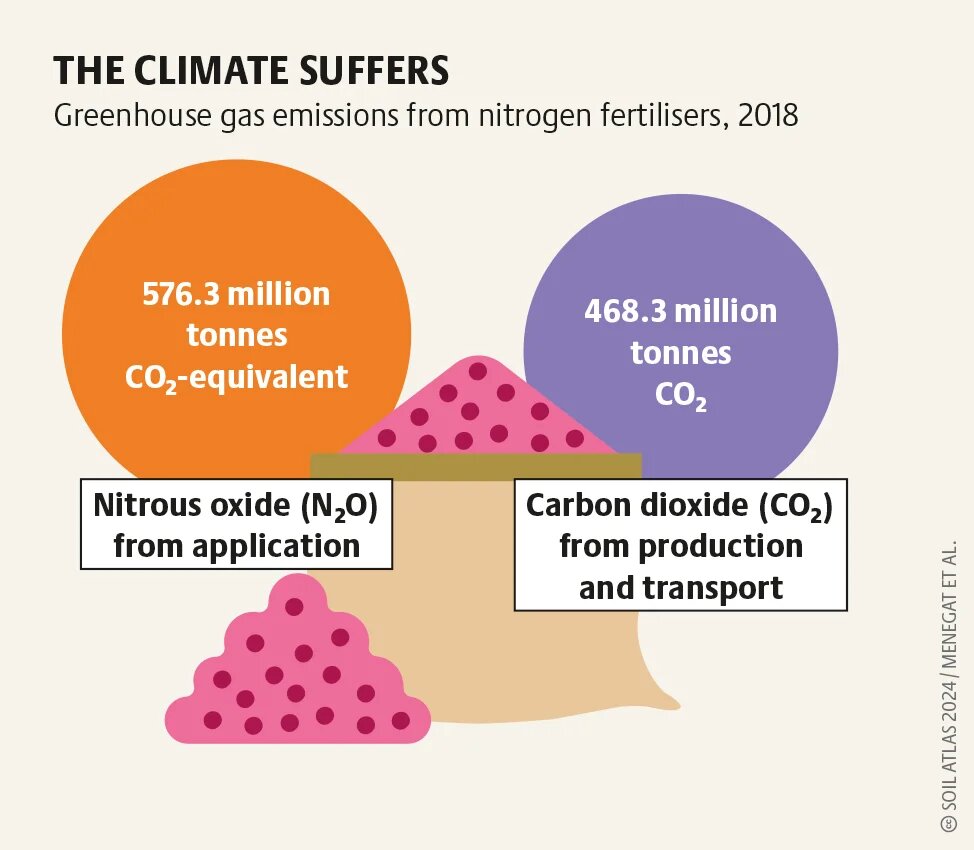
In response to the current crisis, the French Ministry for Agriculture has announced a series of short-term measures, mostly consisting in deferring the deadline for the payment of social security contributions, or negotiating with banks for deferring the payment of loans. It has been promoting such short-term solutions regularly to support farmers in numerous agricultural crises, linked for example to the Covid-19 pandemic or the Russian invasion of Ukraine. But in the longer term, emergency measures are insufficient to build a resilient model, both economically and environmentally. This is why many French NGOs and farmers’ organisations, including Friends of the Earth, Terre de Liens and Confédération Paysanne, strongly support a transition towards agroecology, specifically promoting legume cultivation, in order to shift away from synthetic fertilisers and pesticides. Indeed, legumes help fix nitrogen in the soil, just like chemical inputs, but without releasing nitrous oxide, thus avoiding consequent air pollution and the greenhouse effect of the gas.
High levels of fertiliser use are associated with persistent environmental challenges, in particular nitrate pollution of waters, due to insufficiently optimised fertilisation practices.
While Germany has been facing legal action from the European Court of Justice over nitrous oxide air pollution and nitrate water pollution since 2018, the current Minister for Agriculture has decided to suspend a key on-farm monitoring instrument for nitrogen inputs, the so-called nutrient flow balance. On the other hand, there is a huge untapped potential to scale up a widely available resource for fertiliser: human waste. For three years, an extensive research project called “zirkulierbar” (circulable, recyclable) has investigated the practical use of both urine and solid waste from dry toilets in agriculture. The results are intriguing: The acceptance both among farmers and the overall society are far broader than expected, the fertiliser is easy to use for farmers, achieves comparable yields to crops treated with mineral fertiliser and – if cautiously processed – is safe in terms of pathogens and drug residues. If policymakers were willing to remove legal hurdles and invest in closed nutrient cycles, nitrogen and phosphorus supply could be secured sustainably.
This current situation has significant implications for Poland, which accounts for around 7 per cent of the EU’s agricultural production. At the same time, it is one of the largest producers of nitrogen fertilisers in the European Union, with roughly 15 per cent of total EU output. Despite strong domestic production, Poland remains dependent on imports – especially for potash fertilisers, which are almost entirely sourced from abroad. High levels of fertiliser use are associated with persistent environmental challenges, in particular nitrate pollution of waters, due to insufficiently optimised fertilisation practices. So far, policy responses have largely focused on short-term financial support and market stabilisation, without a coherent long-term strategy to reduce dependence on synthetic fertilisers. Short-term support measures, such as fertiliser subsidies, do not address the structural problems of the food system.
The EU Needs to Act Now
So even if European agriculture will not be hit as hard as other regions, it is painful to observe this next fertiliser crisis, knowing about the inaction of EU member states to become less dependent on fossil fertiliser. While many countries have heavily invested in renewable energies, among other reasons as a way to become less dependent on the import of fossil fuels, no real progress has been made in the European food system.
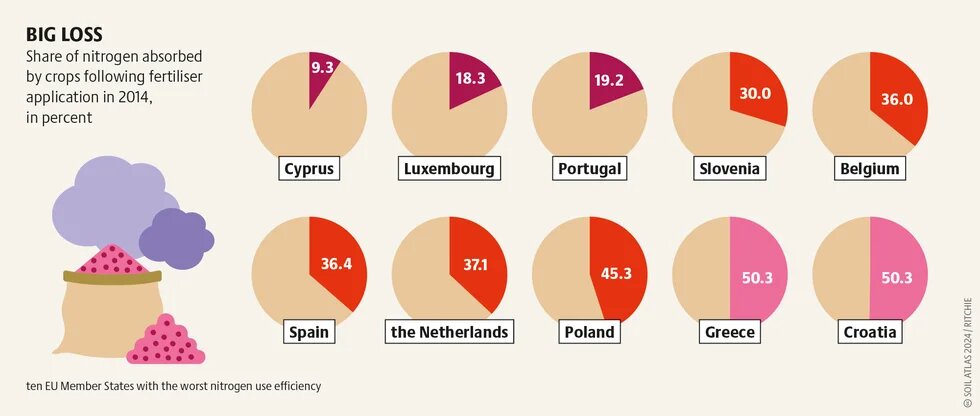
The very least the EU Commission and member states should focus on right now is improve nitrogen use efficiency. As part of the EU Green Deal, the last EU Commission set itself the target of reducing synthetic fertiliser use by at least 20 per cent, only by improving nitrogen efficiency. This was a very moderate goal but with the large nitrogen-related farmers protests in the Netherlands (that even resulted in the rise of a new populist party) in 2022 and another wave of protests in many European countries at the beginning of 2024, no policies followed in order to achieve this goal. On the contrary, an alliance between COPA-COGECA, the pesticides and fertiliser industry and conservative parliamentarians instrumentalised the farmers protests to also block the so-called Sustainable Use of Pesticides Regulation and water down the Soil Monitoring Law, which was originally meant to become a Soil Health Law. What’s more, the current EU Commission is continuing the so-called deregulation, largely at the expense of environmental standards in European agriculture.
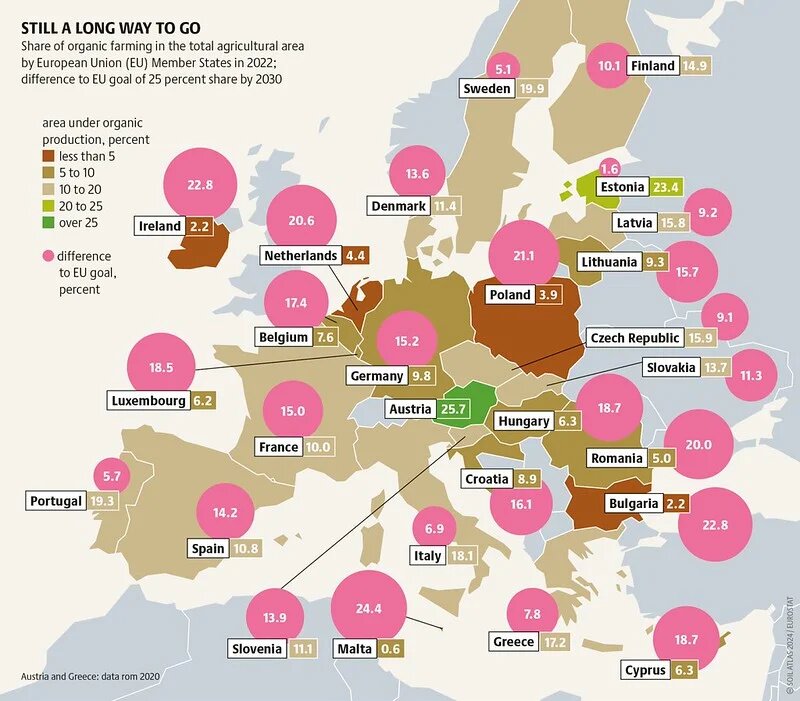
Instead, the upcoming Fertiliser Action Plan should prioritise to improve nitrogen efficiency by closely monitoring on-farm use and sanctioning overuse; subsidise the local biofertiliser production as well as promote research and farmer-to-farmer exchange of best practices; legally enable the safe use of human waste-based fertiliser; and increase subsidies and incentives for transitioning to organic agriculture or agroecological practices. Various agroecological practices could be implemented on most farms right away: Well-designed crop rotations, in particular, can reduce the need for fertilisers without compromising yields. Unlocking this potential will require stronger CAP instruments, including more effective eco-schemes, support for investments in natural fertilisers and biogas, and better advisory services. However, the current impact of these instruments remains limited due to administrative complexity, insufficient scale, and to the lack of binding requirements for actual reductions in fertiliser use.
Progressive farmers’ organisations and environmental activists have long advocated for tackling the dependency of imported, fossil-based fertiliser – even more so in the last few years, as geopolitical crises have multiplied, increasing prices of key farm inputs. Not only would reducing this dependency help strengthen our food sovereignty - it would also be much more cost-effective.


