
Dossier
Gen Z: Voices of a Global Generation
A new, unprecedented wave of young people claiming democratic spaces, both in the streets and online, has swept across the globe since the early 2020s. The Gen Z-led protests achieved not only temporary disruptions - in some cases they sparked revolutions. These movements challenge the idea that democracy itself is in decline. Instead, they point to widespread, grassroots demands for political systems that are more responsive, inclusive and effective.
This dossier examines youth-led movements and collectives, their strategies and their visions for a just future. It also explores the roots of their discontent, and its expression in digital spaces and the arts by bringing together young voices and perspectives from across the globe, the publication presents the diversity of youth-led movements in various formats.
Sharing the Gen Z Struggle
Gen Z movements around the world have captured global attention, and many movements share similar characteristics in terms of tactics and forms of participation. Yet the driving forces behind these movements cannot be treated as a monolith. The protests in, for example, Bangladesh, Nepal, or Morocco, emerge from complex local contexts. At the same time, structurally similar forces exert pressures on youth and society more broadly, and the Gen Z protests represent an unfinished struggle against injustice, inequality, and inadequate governance.

Developmentary
by Maryam Gidado
Gen Z, shaped by broken promises and digital connection, is rewriting democracy through activism, art, and community. From #EndSARS to online movements, they challenge silence and injustice. Rejecting traditional power, they redefine leadership as presence and collective care, painting a future built on courage, creativity, and inclusive connection.Gen Z, shaped by broken promises and digital connection, is rewriting democracy through activism, art, and community. From #EndSARS to online movements, they challenge silence and injustice. Rejecting traditional power, they redefine leadership as presence and collective care, painting a future built on courage, creativity, and inclusive connection.
Transcript
Who are we? This generation called Gen Z, born in the echo of broken promises, yet raised in the rhythm of connection.
We are the children of democracy's unfinished story, post-colonial, yet unafraid to rewrite freedom in our own colors.
Since 2020, silence has felt heavier than speech. From #EndSARS to classrooms, from ballot to art, we rose. Because staying still meant surrender, our protests were not chaos, they were care, care for our people, for our country, for our future.
We are many voices, but one movement, we mobilize not by force but through connection. The screen became our rally ground, the hashtag our meeting place.
In a world where speech is silenced, we found new ways to speak. Our vision for justice isn't only political, it's personal. It looks like classrooms filled with girls who dream, like art that questions power, like digital spaces where everyone belongs. Democracy is not perfect, but it's a canvas, and we are still painting.
We're reclaiming democracy from silence and cynicism with brushstrokes and ballots, with art and action. We are redefining leadership, not as control, but as community, not as power, but as presence.
We're not waiting for the future, we're painting it. This is how Gen Z women reclaim democracy with courage, creativity, and connection.
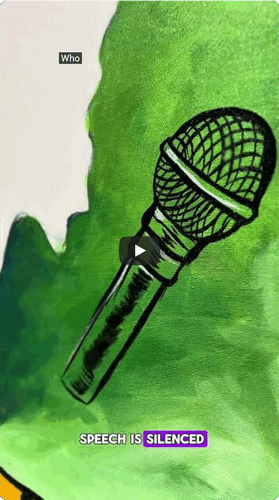
Watch this short on YouTube.





Since the 2020s, young people around the world have been taking to the streets to protest against authoritarian regimes, corruption, and economic insecurity—including in Nepal, Indonesia, Madagascar, Nigeria, and the Philippines. Gen Z utilizes internet platforms, social media, and creative forms of protest to organize themselves, raise public awareness, and build political pressure.
In many of these movements, women play a central role—whether as organizers, role models, activists, or participants. Nevertheless, they often remain invisible in media coverage. And even when protests trigger political change or regime shifts, women do not automatically gain access to positions of political responsibility.
In this episode (in German language), we speak with activists, authors, researchers, and artists from Nigeria, Nepal, Indonesia, and Sri Lanka about protest, gender justice, political participation, and the question of what unites Gen Z across the globe.


