

Tunisia is one of the most water-scarce countries in the world. Activists are fighting against political silence and calling for greater ecological awareness.
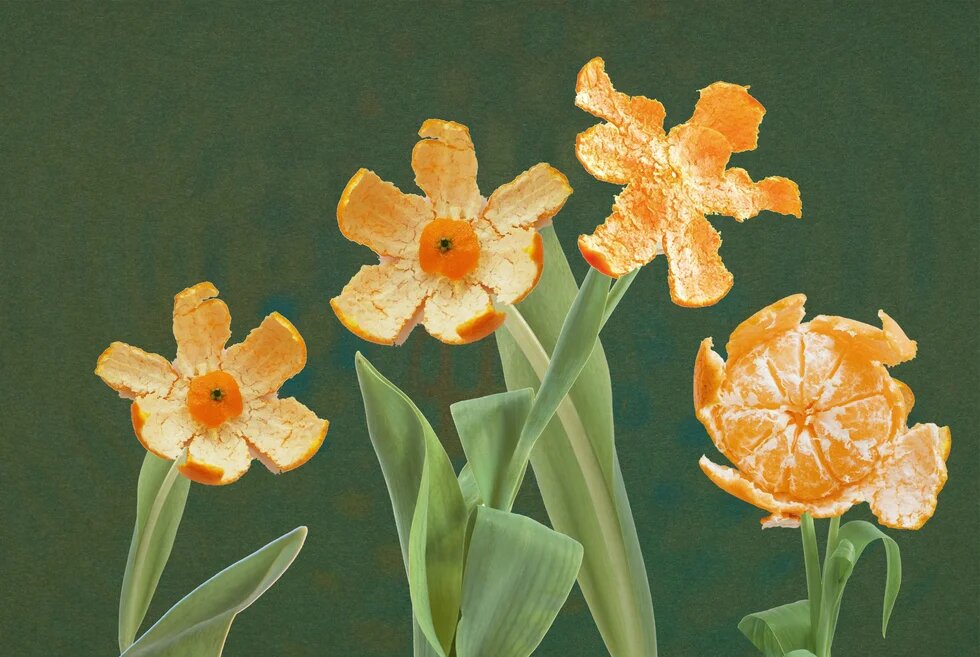
When Rawè Kefi was born, her parents named her after a very special phenomenon. In Tunisia, Rawè is the name given to the first rain after a long drought. Rawè Kefi's father runs an orange farm in Menzel Bouzelfa in north-eastern Tunisia. Rawè Kefi remembers how when she was little, he and the other farmers would call each other as soon as the long-awaited rain arrived in December. "May the first rain bless you," they said, giving each other sweets and celebrating together.
"I remember those days in winter when it rained and everybody was happy," says Rawè Kefi. "The orange grove was so green and vast, the colors so vivid. It was beautiful."
Today, Rawè Kefi is 29 years old and rarely visits her family's farm. "It is too painful to see the trees dying, one after the other."
Some of the orange trees are as old as she is; she grew up with them. Now many of them are sick, their leaves brown and shriveled.
Her family's farm is just one of many affected. Menzel Bouzelfa is known as the "orange capital." Tunisia's best oranges come from there, Rawè Kefi says proudly. But for years now, there has not been enough rain, and the soil is becoming salinated. Her father is now considering selling his farm. "For me, climate change is already a reality. It is palpable because I am experiencing it with my own family."
Tunisia Is One of the Most Water-Scarce Countries in the World
Rawè Kefi has spent half her life campaigning for protection of water and the environment – in a country that is one of the most water-scarce in the world. While each person in Germany consumes around 2,600 cubic meters of water per year, the people of Tunisia have only around 420 cubic meters per capita at their disposal.
The already scarce water resources are increasingly threatened by the climate crisis. Since 2017, there have been more frequent droughts with serious consequences for water and food security. Since President Kais Saied took power in 2019, he has isolated the country leading it into an economic crisis that leaves little room for modernizing agriculture or adapting to climate change. "People need to hear that we are in a state of national emergency," says Rawè Kefi. She wants to raise public awareness of the water crisis among Tunisians. She believes that each and every one should feel responsible – and that every individual can make a difference.
Rawè Kefi learned to save water early on, not only because she is the daughter of a farmer.
"My mother set up a system in our house for recycling domestic water. We believe that water is something very precious, a blessing from God that should not be wasted."
The water the family uses for showering is later used to flush the toilet, and wastewater from the kitchen is used to water the plants.
“We always had the cheapest water bill in the whole neighborhood, if not the whole city”, Rawè Kefi says laughing.
Listening to Rawè Kefi, it's hard not to feel hopeful. She talks fast but in a structured way, smiles a lot and gestures energetically. She has just submitted her doctoral thesis, which deals with art and culture in the context of nature and climate. She recently began teaching environmental humanities at a university in Tunis. This new interdisciplinary research field uses social science perspectives to rethink environmental issues.
Raising Awareness Through Art
"I believe in the power of art and culture to move people’s consciences," says Rawè Kefi, who has herself experimented with environmental poetry. "If I just present people with facts and diagrams, I will not interest them in environmental issues. But if I use poetry slams, music or poetry, I can reach them on a different level." Among other things, Kefi led a project with schoolchildren to create plays, rap songs and short films on the topic of water conservation.
Her work often focuses on the younger generation. Rawè Kefi is committed to ensuring that young people learn about environmental protection at an early age – not only through theoretical lessons in school, but by experiencing nature for themselves.
As a member of the Tunisian organization "Réseau Enfants de la Terre" (Network of the Children of the Earth), she currently mentors 240 young activists between the ages of 8 and 30 who are researching the effects of climate change in all 24 governorates of Tunisia.
Addressing the Tunisian Government
She is also a member of the Tunisian Young Climate Change Negotiators. The initiative was founded in 2021 by the Tunisian Ministry of Environment and was the first of its kind in West Asia and North Africa. In order to involve young people in decisions on climate change, participants learn how climate policy works and how it is negotiated at the international level. Once a year, they accompany the Tunisian delegation to international climate summits.
Rawè Kefi’s experience as a climate negotiator is evident: she has a clear vision of her demands to the Tunisian government and its political and economic partners. On the one hand, she is concerned with the economic dimension: "Despite the crisis we are living in, the government is still exporting goods with a high water footprint, like oranges, dates, strawberries or watermelons." Like many countries in the Global South, Tunisia is heavily indebted and dependent on foreign currency. Focusing on the export economy is a way of dealing with this situation, but " the amount of water we are losing cannot be repaid with foreign currency," believes Rawè Kefi. In her view, trade agreements, especially with the EU, need to be reviewed urgently.
From a legal perspective, she calls for stricter sanctions against water wastage, especially by national and international private companies. Overuse and pollution of water should be punished as "ecocide", she says. "I am not against the private sector, but it has a social and environmental responsibility. It has to find ways to repair the damage it causes."
Water Diplomacy Instead of Conflict With Neighboring Countries
In addition, Rawè Kefi expects the Tunisian government to focus more on water diplomacy – to avoid political conflicts over transboundary waters with neighboring countries in the future. Instead, the goal should be greater cooperation. Above all she wants the government to raise awareness of the water crisis. "The government should stop reassuring people. Everyone needs to understand that this is an emergency – as if a war had broken out."
Every single person should feel responsible for solving the water crisis.
"I don't want to individualize the crimes. The government holds the most responsibility.
But I truly believe that we as individuals can make a contribution, no matter how small, in our households, our neighborhoods, our schools."
Working together with others, taking action instead of just being afraid, gives Rawè Kefi hope despite the worsening water crisis. Through this commitment, she has developed a deeper connection to her country, which she calls "ecological citizenship".
"I love my country for its nature and ecosystems. With this sense of belonging, we can make our Tunisia green again."